Factory-Fit RF Jumpers for Critical RF Connections
Factory-Fit RF Jumpers are pre-terminated coaxial jumper assemblies used where short RF connections must be electrically stable, mechanically reliable, and installation-ready from the start. They typically sit between feeder cables, antennas, radios, and other RF interfaces in base station, rooftop, cabinet, and indoor distribution environments.
RFS positions the family around controlled industrial connector attachment and a broad jumper portfolio across multiple sizes, connector combinations, and jacket types, including indoor HFFR and outdoor PE variants. In practical terms, these jumpers fit projects where connection quality, weather protection, and predictable site installation matter more than field-assembled cable terminations.
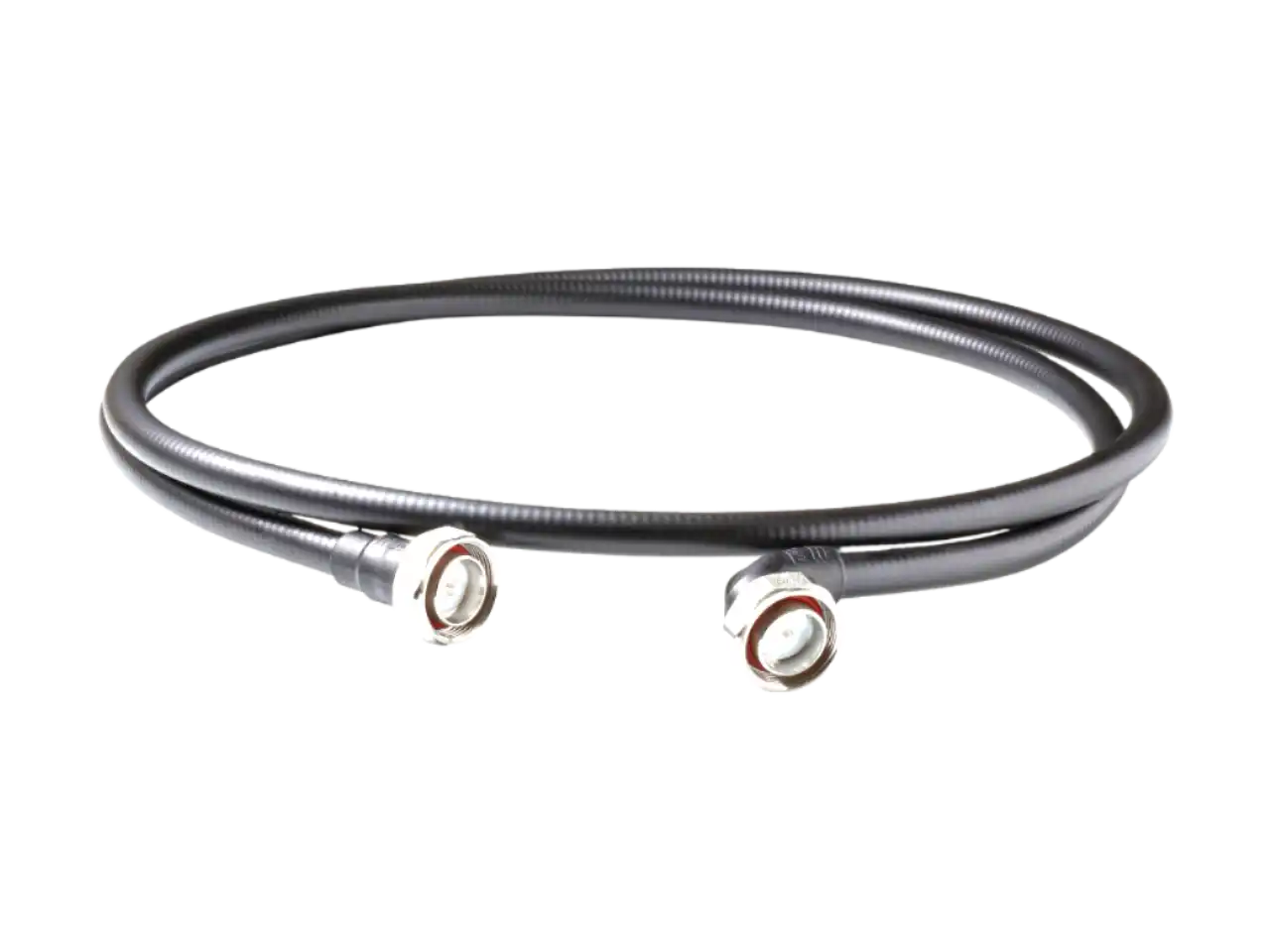
Key features and advantages
This section highlights the main practical advantages of factory-fit RF jumpers in real installation environments. The family is built around pre-terminated assemblies, controlled connector attachment, and jacket options for different site conditions, making it relevant where connection quality, installation consistency, and long-term reliability all matter.
Pre-terminated connection path
Delivered as ready-made jumper assemblies for faster installation and more consistent connection quality in the field.
Controlled connector assembly
Factory termination helps reduce variation in connector attachment, sealing quality, and overall installation consistency.
Indoor and outdoor options
Available with different jacket types for indoor routing, outdoor exposure, and broader site-specific installation needs.
Broad connector compatibility
Offered in multiple cable and connector combinations for different RF interfaces and connection points.
Factory-Fit RF Jumper variants and configurations
Compare the main RF jumper configuration paths within the wider family. This section highlights the practical differences between super-flexible, low-loss, and cluster jumper designs, helping position the right jumper type for constrained spaces, longer jumper runs, and connector-dense antenna interfaces.
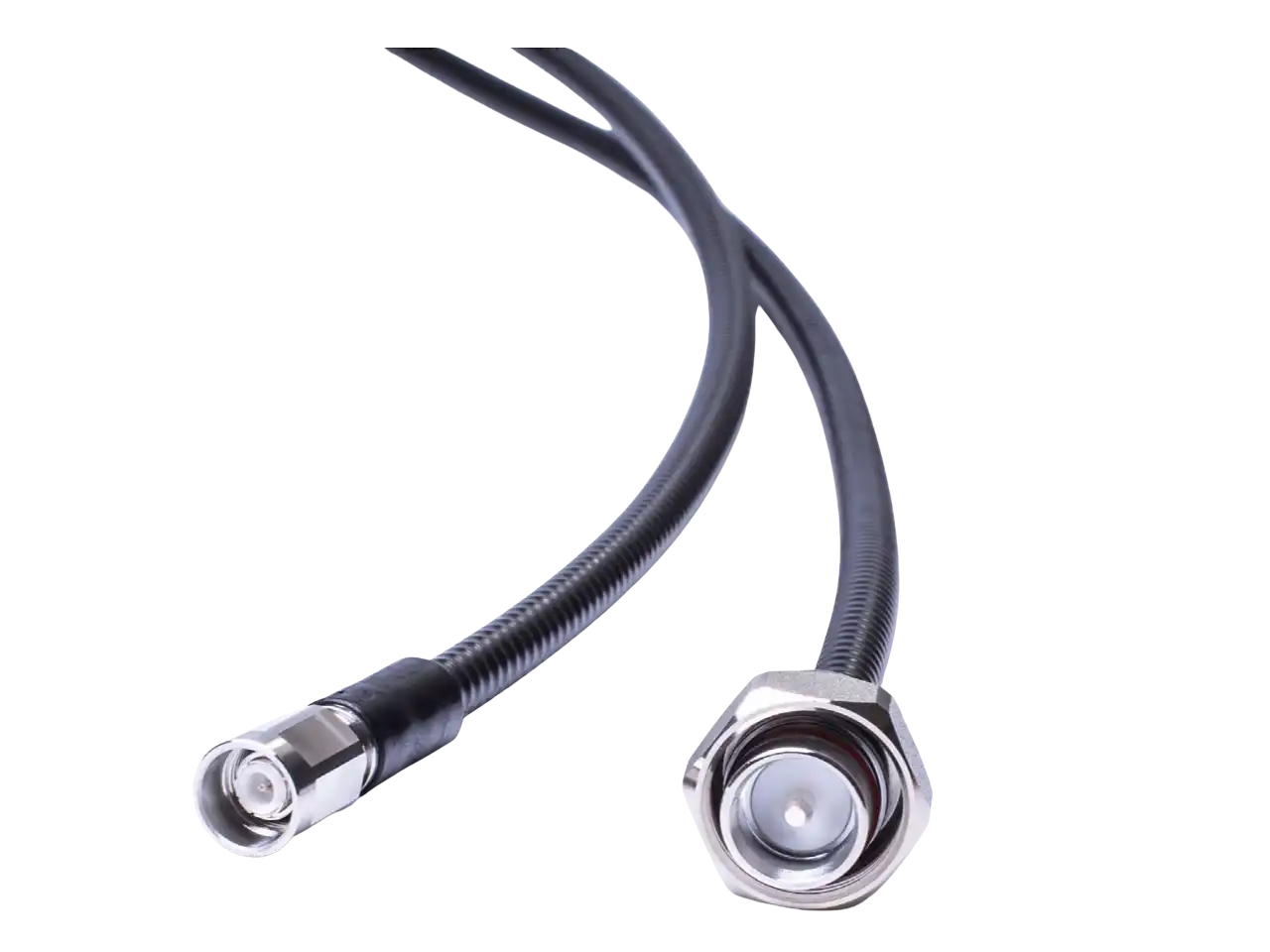
Super-flexible jumper cables
Super-flexible jumper cables are intended for installations where bending behavior, routing flexibility, and compact connector access are more important than maximizing attenuation performance over longer jumper distances. They are especially relevant in crowded radio and rooftop environments, small cell installations, and other layouts where the cable must pass through tight spaces or connect within a limited footprint. This makes them a practical jumper choice where physical handling and compact installation geometry are central to the deployment.
In the RFS structure, the super-flexible path includes SCF-based jumper types such as 1/4-inch, 3/8-inch, and 1/2-inch variants. The selection guide specifically points to constrained urban sites and short-distance connections as typical use cases, especially when compact connectors such as NEX10 or 4.3-10 are involved. Their value is primarily installation-side: easier routing, better handling in tight spaces, and more practical connection work where equipment density is high.
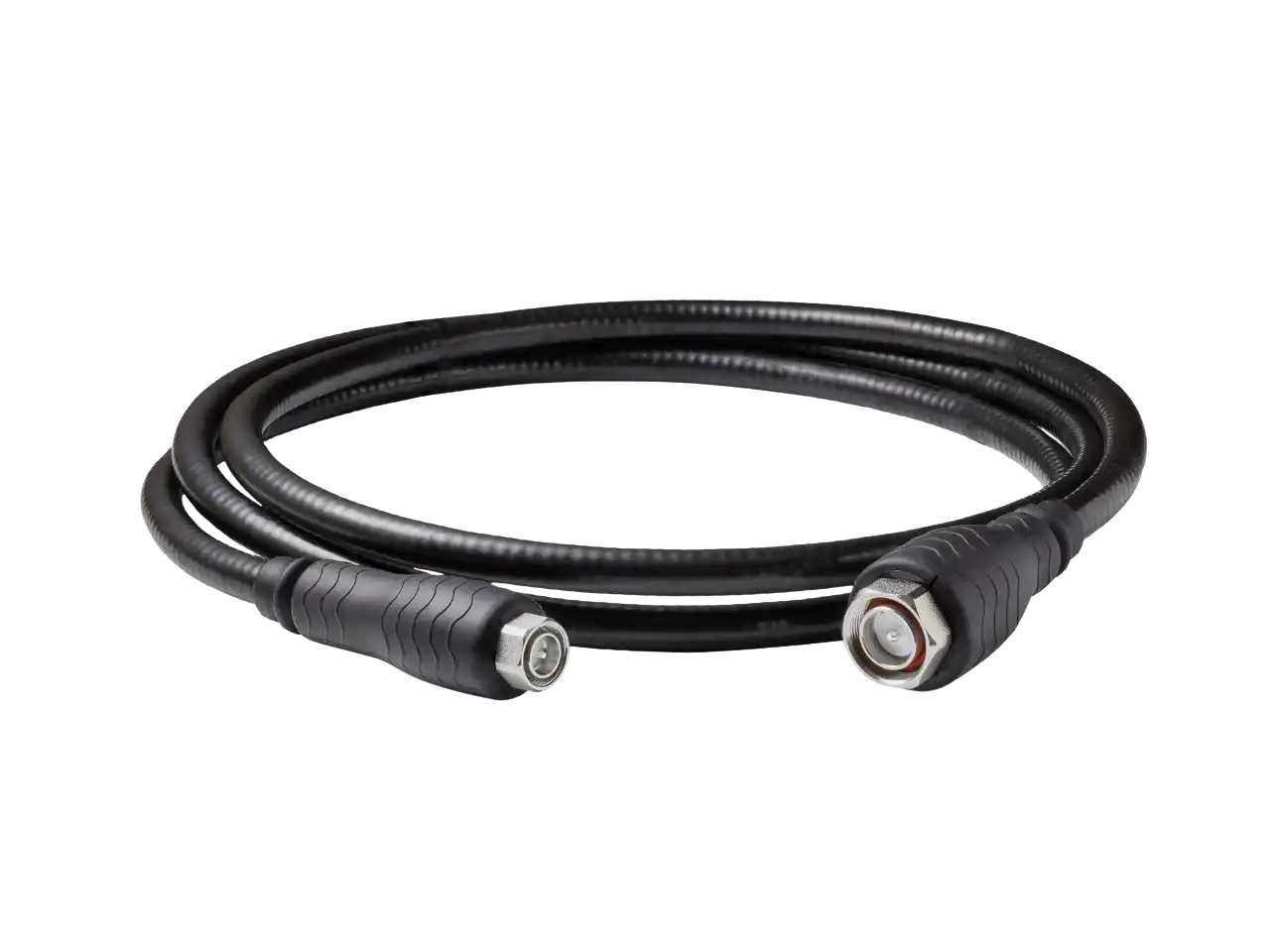
Low-loss jumper cables
Low-loss jumper cables are intended for applications where jumper attenuation deserves more attention and the connection path must preserve transmission efficiency as effectively as possible. They keep the same general role as other factory-fit jumper assemblies, but shift the emphasis toward stronger electrical performance. This makes them more suitable where jumper length, system performance targets, or overall RF path efficiency matter more than maximizing cable flexibility in the immediate installation area.
In the RFS jumper structure, the low-loss path is presented as the preferred option when longer jumper distances require better attenuation behavior than a super-flexible design would normally prioritize. The guide specifically points to 1/2-inch low-loss jumpers for longer-distance connections. In practical project terms, these jumpers fit sites where the connection remains short compared with a feeder run, but where electrical efficiency still has enough weight to influence the jumper-cable choice.
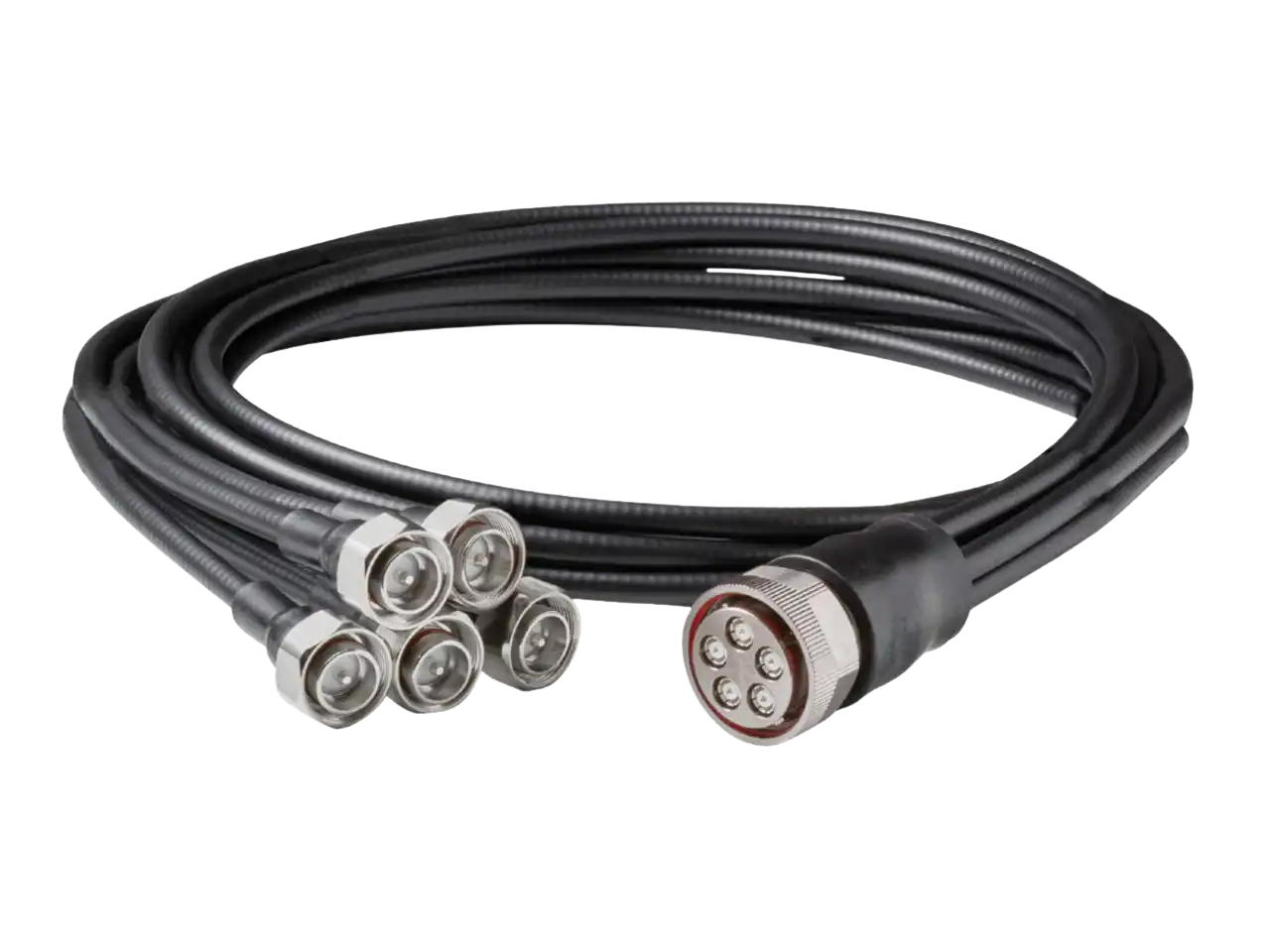
Cluster jumpers
Cluster jumpers are specialized assemblies for highly integrated antennas with many RF ports in a very limited physical space. Instead of using standard one-port jumper geometry, they branch into multiple compact connector terminations that help connect dense antenna interfaces more efficiently. This makes them relevant for modern multiband antenna deployments where conventional jumper layouts cannot physically support all required connections within the available space.
The RFS guide positions cluster jumpers as a response to connector-dense antenna designs used in newer mobile deployments. A single jumper branches to multiple compact MQ4 or MQ5 connectors, making it possible to connect large numbers of RF ports within the footprint of a typical antenna end cap. Their value is not general-purpose jumper flexibility, but solving a specific physical integration problem where antenna density exceeds what standard jumper assemblies can handle cleanly.
Core construction and connection design
This section outlines the main design elements behind factory-fit RF jumpers and explains how cable construction, connector integration, and assembly quality influence electrical performance, installation consistency, and long-term connection reliability.
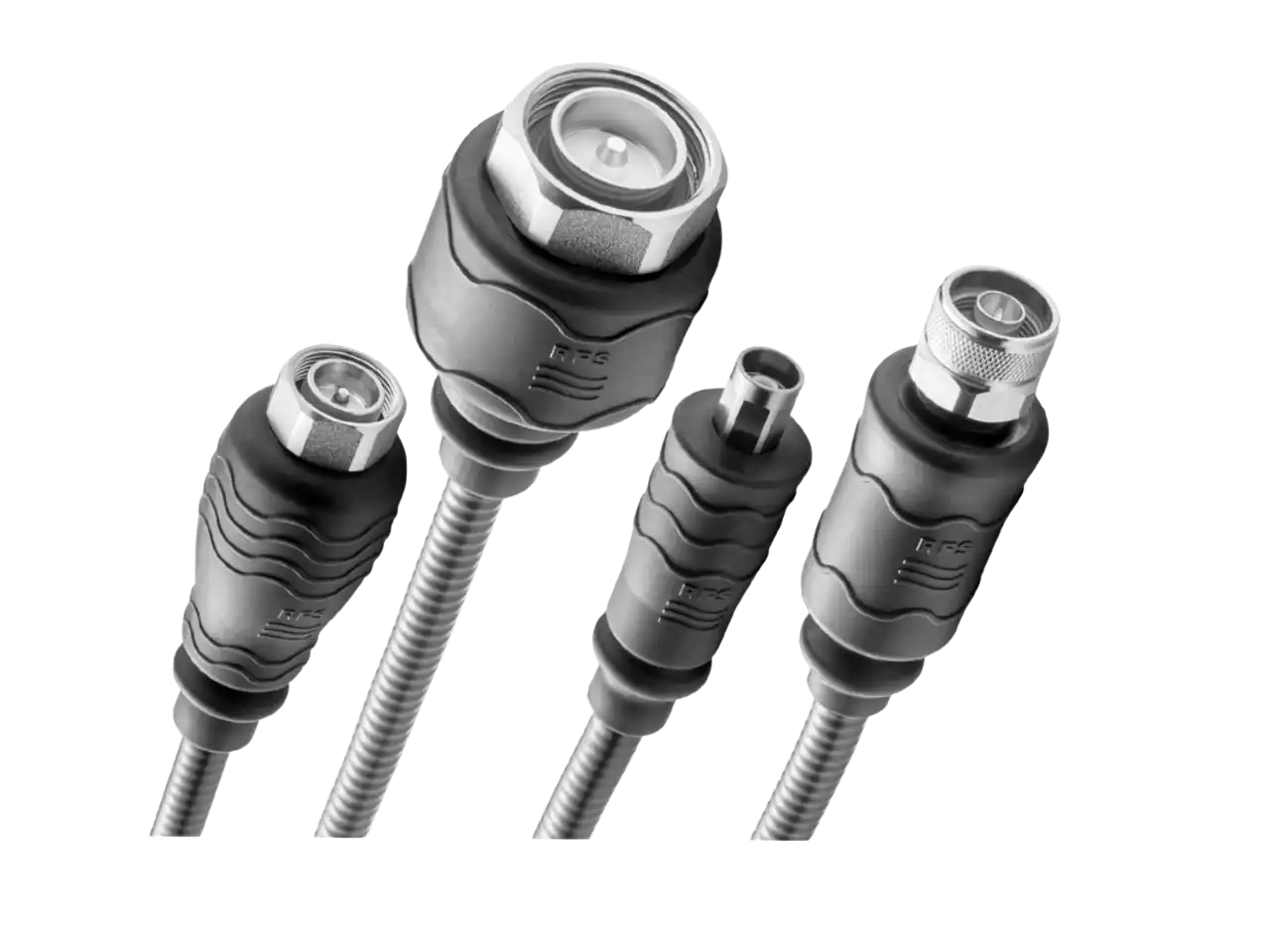
Jumper cable construction
The cable body defines the jumper’s mechanical behavior and electrical role within the RF path. It influences flexibility, attenuation, routing practicality, and how easily the assembly can be installed in cabinets, rooftops, radio units, and antenna interfaces. In practical terms, cable construction is one of the main reasons different jumper families exist, because not every site needs the same balance between compact handling and electrical efficiency.
This matters because jumper assemblies are often selected for very specific physical conditions rather than only for connector type. A super-flexible jumper, a lower-loss jumper, and a cluster-style assembly can all solve different connection problems inside the same network architecture. The cable design therefore shapes not only performance, but also how cleanly and reliably the jumper can be deployed in real field conditions.
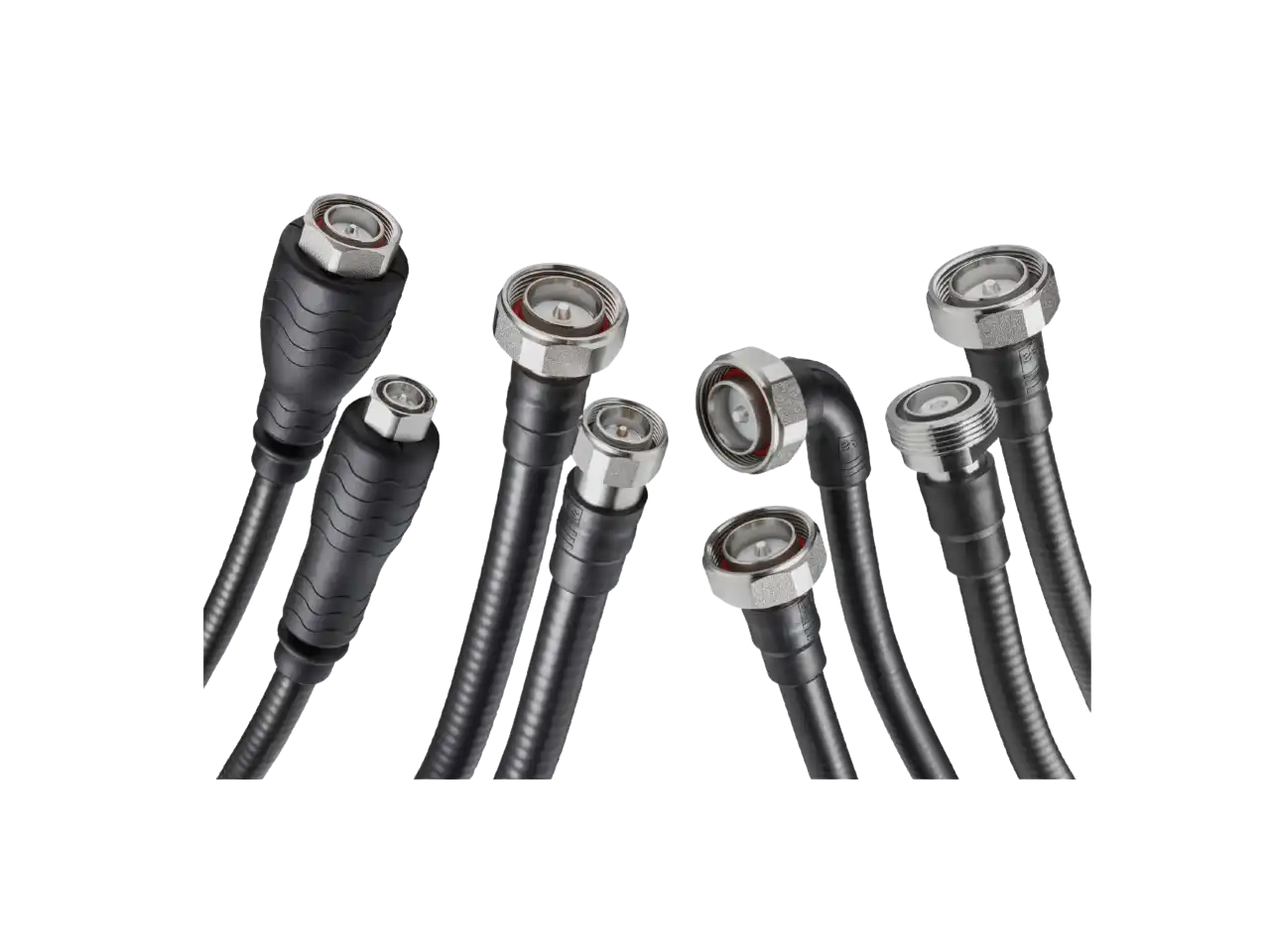
Factory-terminated connector interface
The connector interface is a defining part of a factory-fit jumper because it determines how the assembly meets equipment, antenna, or feeder interfaces in the field. Its quality affects electrical continuity, mechanical stability, sealing, and long-term reliability at the connection point. In practical installation terms, this is one of the main reasons factory-fit jumpers are used instead of site-terminated short RF cables.
Connector quality matters because the RF path can only perform as well as its weakest interface. Factory termination helps keep assembly conditions controlled, which reduces variation in attachment quality and improves repeatability across larger deployments. This becomes especially important in projects with many jumper connections, compact equipment layouts, or external connection points where installation consistency has a direct effect on long-term service reliability.
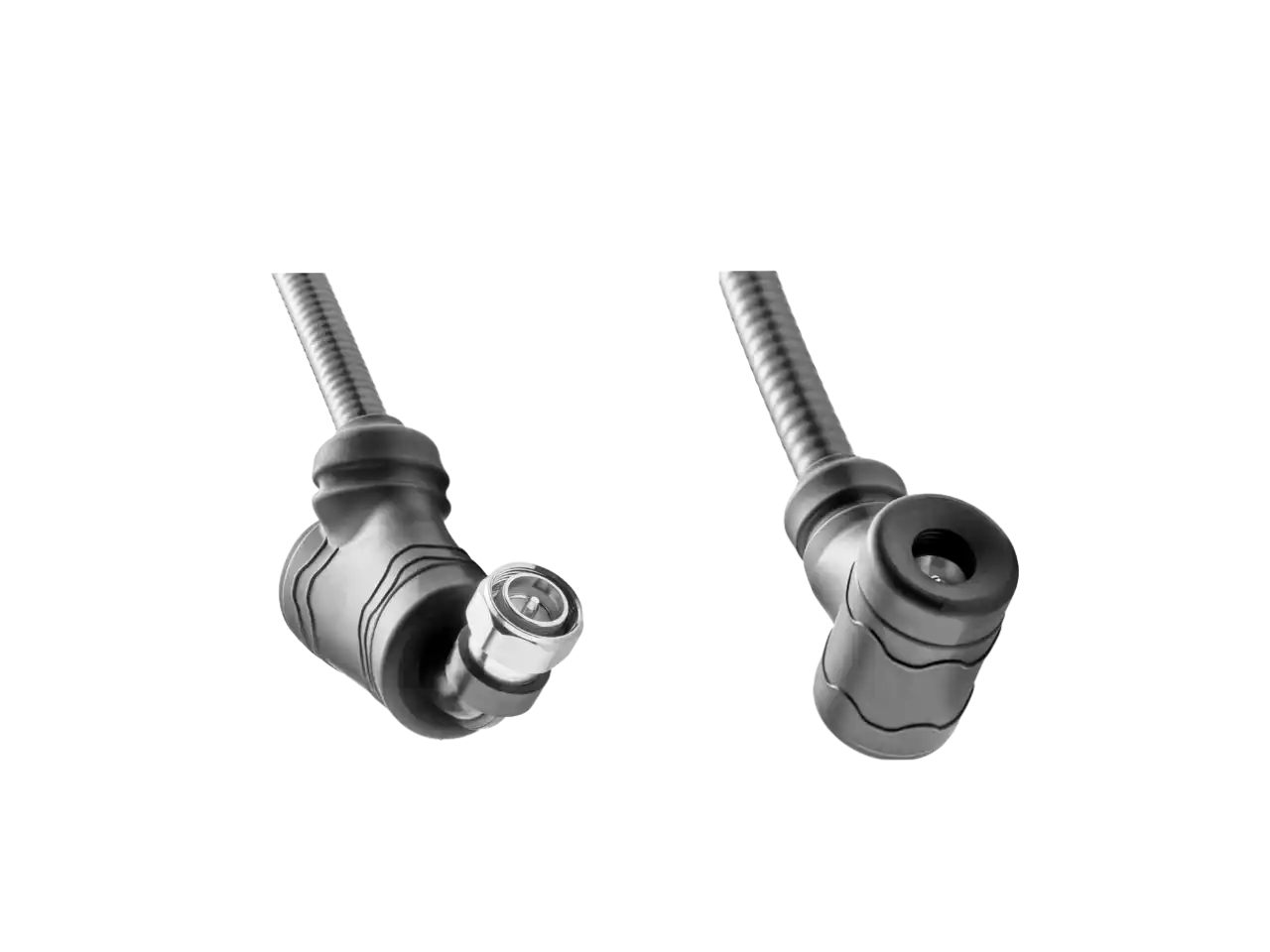
Jacket, sealing and environmental fit
The outer jacket and sealing approach help define where a jumper assembly can be used and how well it will tolerate its installation environment. They influence mechanical protection, routing behavior, and long-term resilience at exposed connection points. In practice, this matters because jumpers may be installed in protected indoor spaces, on rooftops, on towers, or near antenna interfaces where environmental exposure becomes part of the design decision.
This layer of the assembly is not only protective but also deployment-specific. A jumper that performs well electrically can still become the wrong choice if its environmental fit is poorly matched to the site conditions. Jacket type, sealing quality, and connector protection therefore play a practical role in determining whether the jumper will remain reliable over time in the actual operating environment.
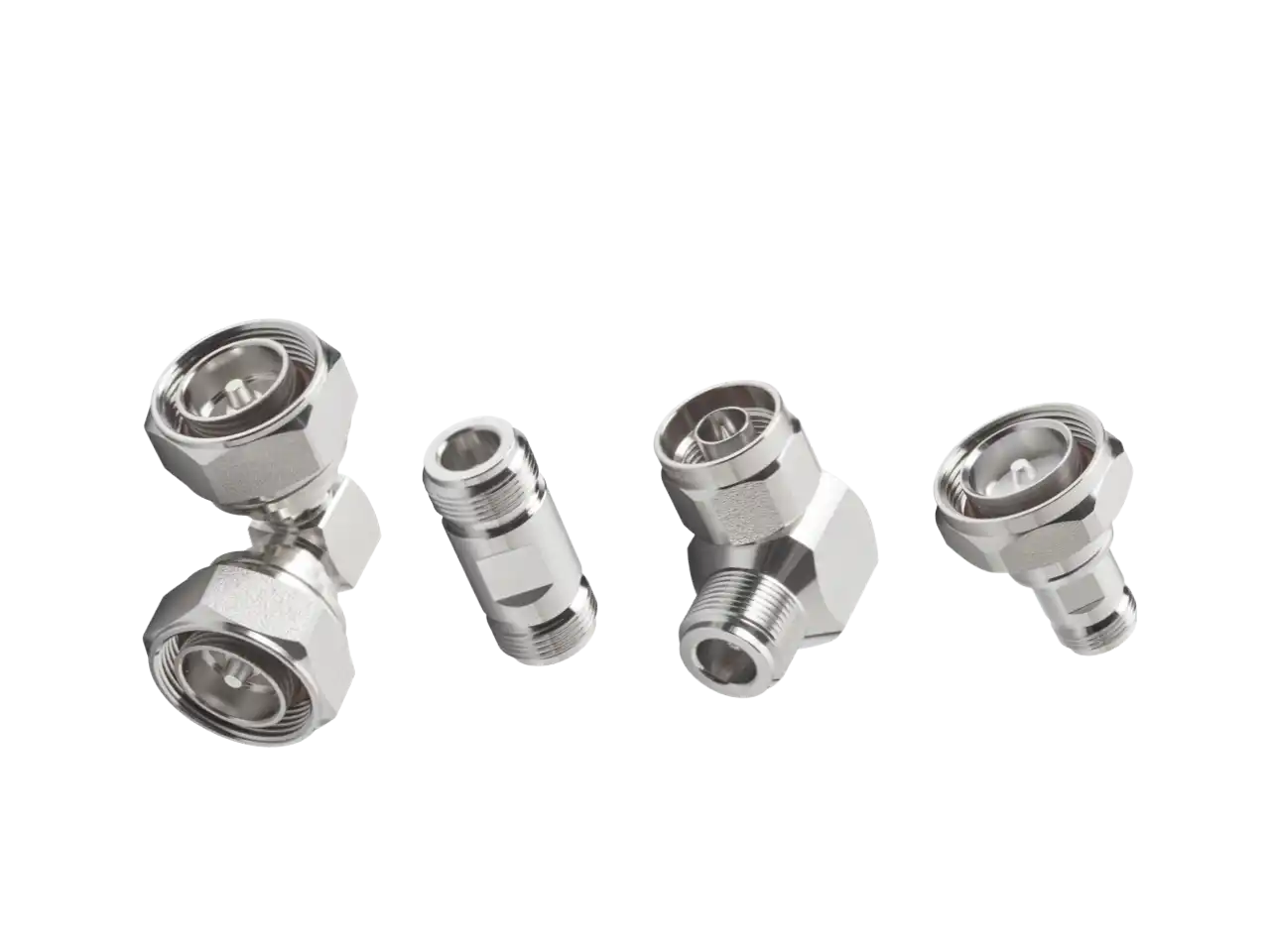
Connector combinations and interface options
Connector combinations define how a jumper assembly fits into the wider RF path between radios, antennas, feeder cables, and other equipment interfaces. They influence mechanical compatibility, installation access, and how cleanly the connection can be made in compact or connector-dense layouts. In practice, this matters because the jumper must solve not only an electrical connection but also a physical interface problem at the point of installation.
This becomes especially important where equipment generations, connector standards, or installation geometry vary across the site. The right connector pairing helps reduce adaptation complexity and makes the RF path easier to install and maintain correctly. In projects with many connection points or tight physical spacing, interface choice can have a direct effect on deployment speed, routing clarity, and long-term serviceability.
Need help choosing the right RF jumper assembly?
Factory-fit RF jumpers vary by cable type, flexibility, attenuation profile, connector combination, and installation environment. Astrec can help identify the right jumper approach for rooftop, tower, indoor, DAS, and other RF infrastructure projects.