
HYBRIFLEX Fiber, Power and Hybrid Cables
HYBRIFLEX cable solutions are designed for radio sites, distributed coverage systems, and other critical network environments where fiber connectivity, DC power delivery, or both must be routed efficiently through the same infrastructure. The family covers three clear solution paths: fiber-only assemblies for optical connectivity, power-only cables for remote equipment supply, and hybrid fiber-plus-power constructions for deployments that benefit from reduced cable count and cleaner routing. Across these solution types, the range supports pre-terminated and field-terminated approaches, compact distribution concepts, and accessories for protection, breakout, patching, and installation. That makes HYBRIFLEX suitable not only for outdoor macro and small-cell installations, but also for in-building and cross-campus deployments where installation speed, space efficiency, serviceability, and long-term network evolution all matter.
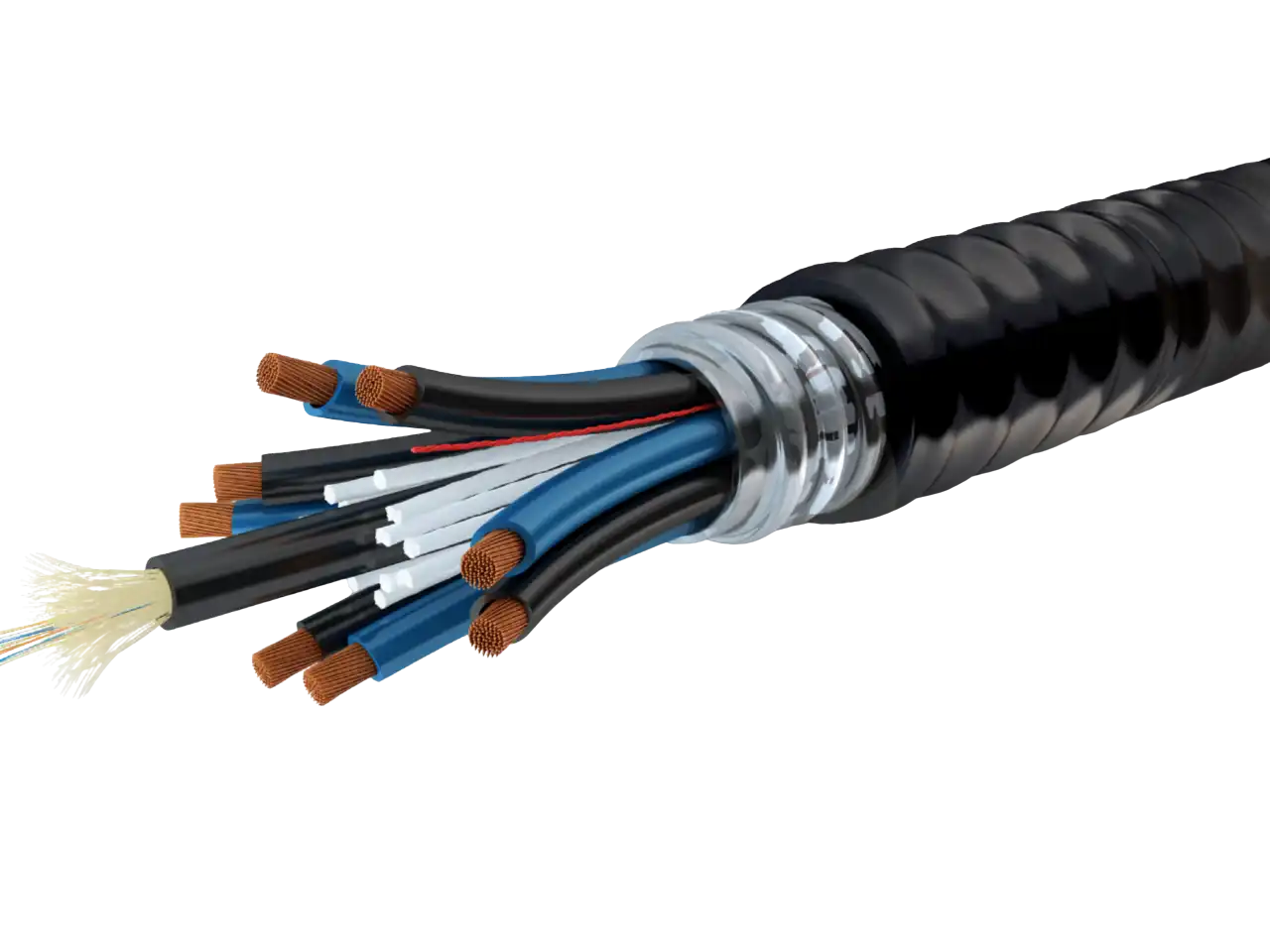
Key features and advantages of HYBRIFLEX Fiber, Power and Hybrid Cables
HYBRIFLEX solutions make it possible to route fiber connectivity, power, or both to equipment as an organized, installation-ready cable system. This helps reduce on-site work, keep cable routes clearer, and improve installation repeatability in environments where connection reliability, protection, and later service access matter.
Integrated Fiber and Power Paths
Combine optical connectivity and DC power in one routed cable path to reduce cable count, simplify installation, and keep site layouts cleaner.
Faster and Simpler Deployment
Pre-terminated and field-configurable approaches help reduce on-site work, installation time, and testing effort across radio, indoor, and cross-campus deployments.
Flexible Solution Architecture
Choose fiber-only, power-only, or hybrid constructions with options for different cable types, conductor sizes, fiber formats, and deployment methods.
Built for Evolving Networks
Supports high-bandwidth optical infrastructure and converged network designs for radio sites, DAS, RoF, and other critical connectivity environments.
Solution Paths and Configuration Options for HYBRIFLEX Fiber and Power Cables
HYBRIFLEX covers three practical approaches: fiber-only links for optical connectivity, power-only cables for remote equipment supply, and hybrid constructions that combine both in one routing path. This section should explain where each approach fits and how the family supports different site layouts, installation methods, and service requirements.
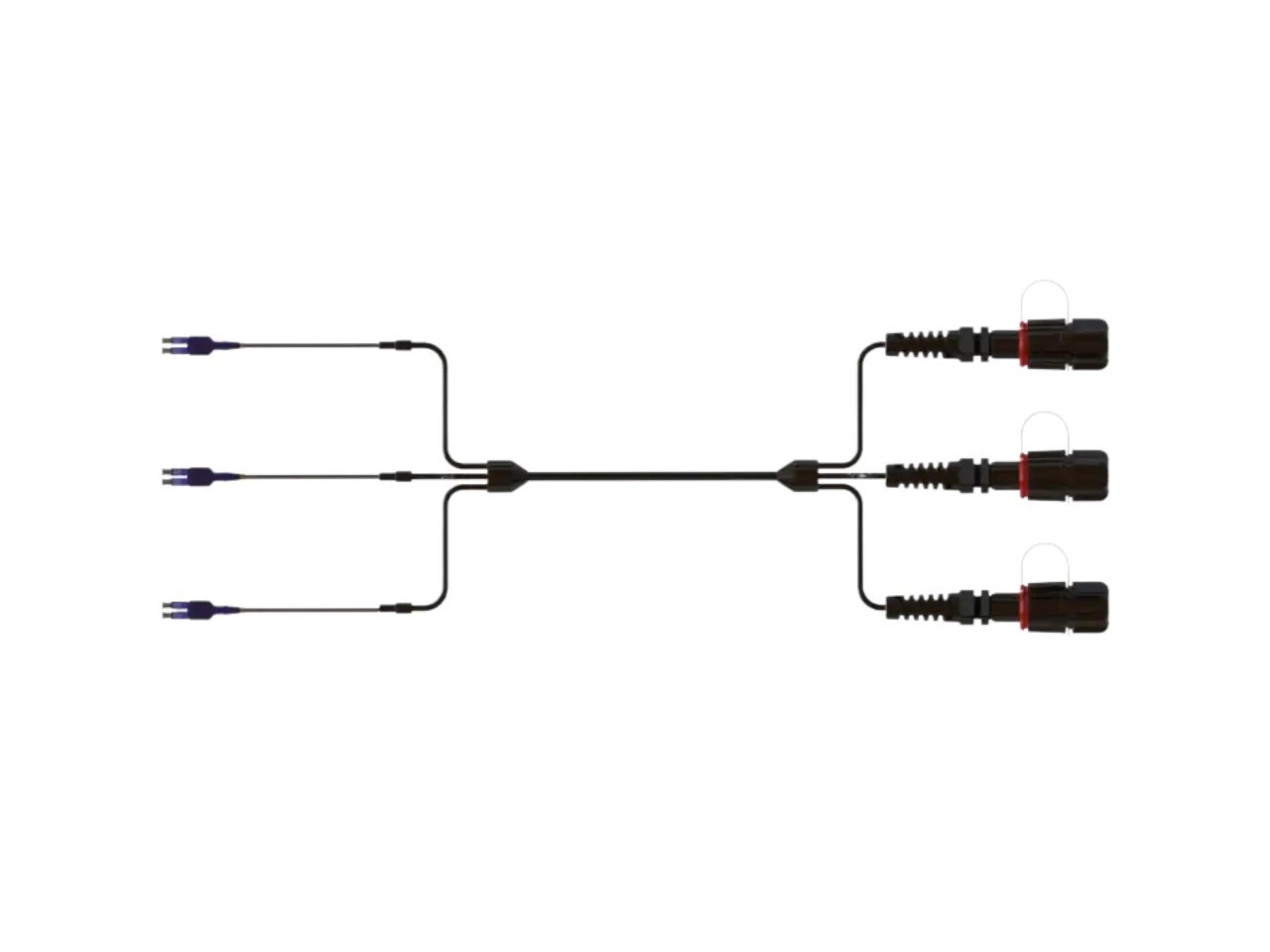
Fiber-Only Connectivity
This path fits deployments where optical transport is the main requirement and power follows a separate design. It works well for radio links, indoor backbone runs, and high-bandwidth distribution where clean fiber routing, low-loss connections, and future expansion matter more than combining services into one cable. HYBRIFLEX includes both pre-terminated and more conventional fiber approaches for this type of architecture.
Within the HYBRIFLEX family, fiber-only solutions can support rapid plug-and-play installation or more traditional site practices, depending on how the network is built and terminated. The brochure shows pre-terminated indoor assemblies for faster deployment, as well as conventional fiber solutions based on single-mode infrastructure, APC interfaces, and architectures intended for long-term bandwidth growth, including demanding Radio over Fiber environments.
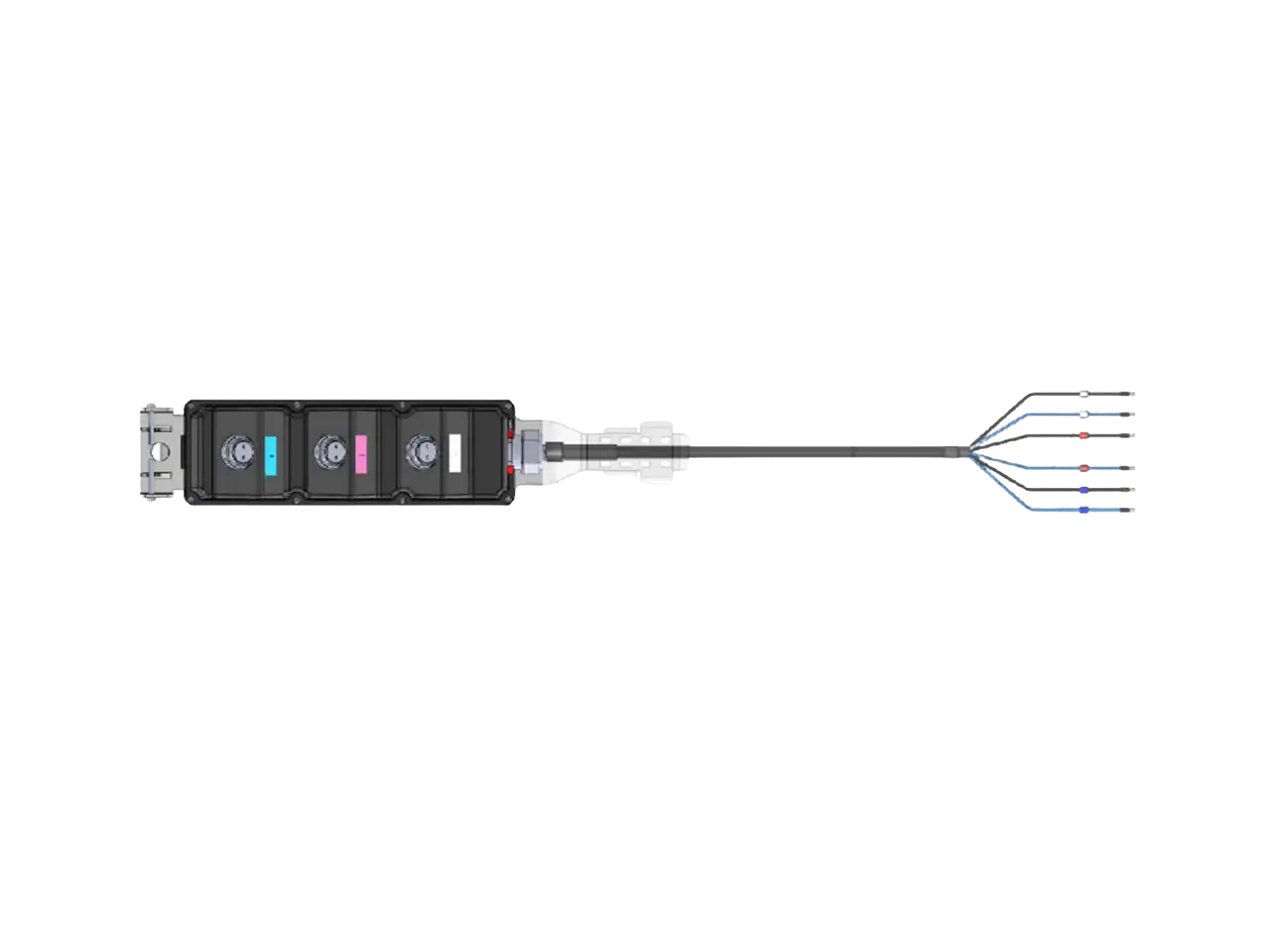
Power-Only Distribution
This path fits deployments where remote equipment needs reliable DC supply, while fiber follows a separate connectivity design. It is suitable for outdoor radio installations and other site layouts where conductor count, cable protection, routing method, and mechanical robustness are primary design concerns. HYBRIFLEX covers armored and unarmored constructions with different conductor arrangements, so the power path can be matched to the installation environment rather than forced into a hybrid design.
That makes this option useful where DC delivery is the key requirement, but installation still benefits from a structured cable system with defined accessories, protection elements, and site-ready routing components.
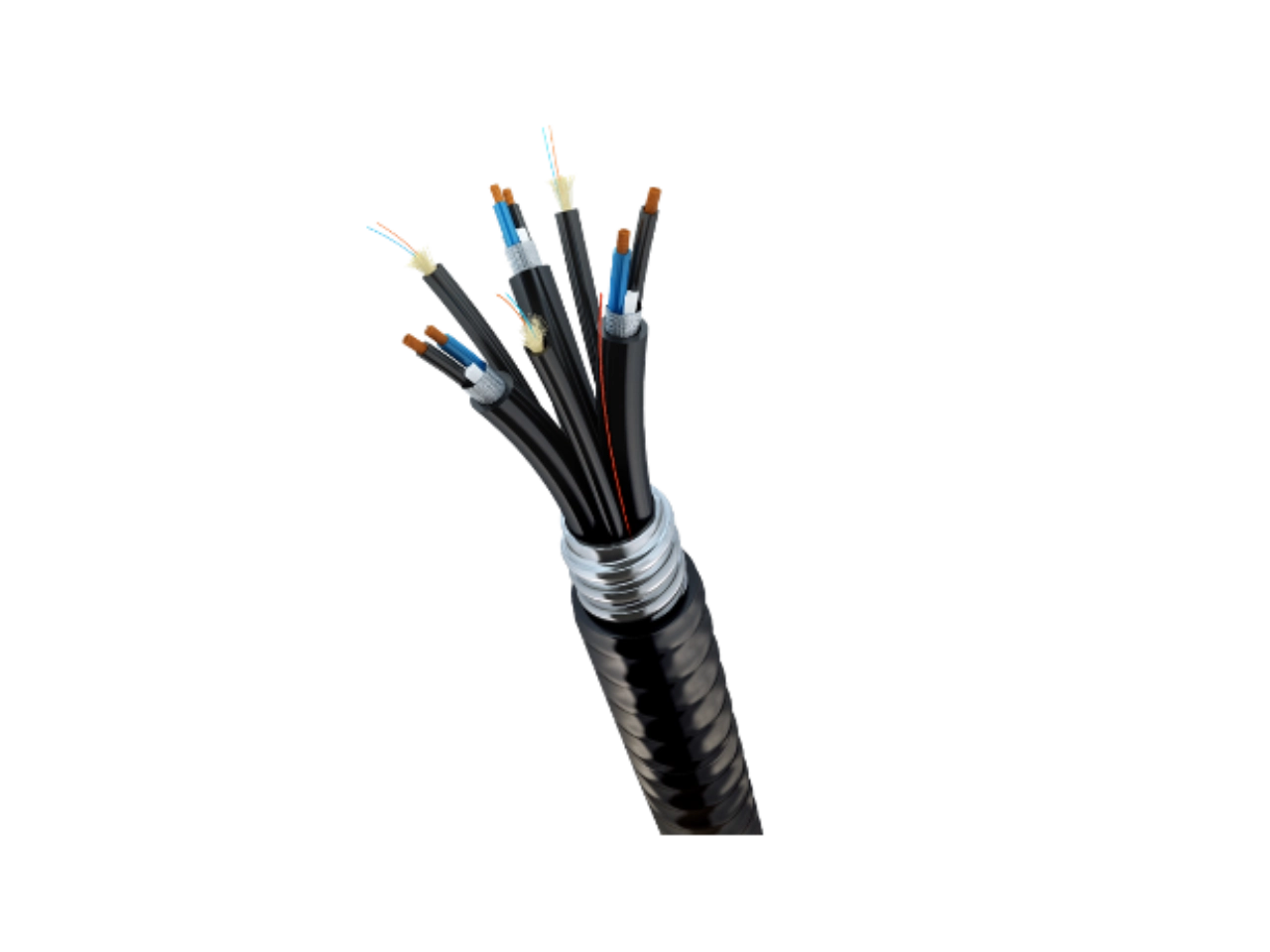
Hybrid Fiber + Power
This path is for deployments where optical connectivity and DC power should follow the same physical route. It is the strongest fit for remote radios, DAS, and other connected field devices where reducing cable count, simplifying routing, and keeping installation more controlled are more important than separating power and fiber into different runs. HYBRIFLEX hybrid constructions help create cleaner infrastructure in both outdoor and in-building environments.
These solutions can support diverse routing and can be optimized to reduce installation time, disruption, and coordination effort. That makes the hybrid approach especially relevant where service continuity, installation efficiency, and compact infrastructure all matter at the same time.
Product Highlights and Accessories
HYBRIFLEX is not only about cable construction. The broader solution includes preassembled distribution elements, trunk and jumper assemblies, fiber termination hardware, and installation accessories that make routing, protection, patching, and site rollout more practical. This section should highlight the reusable building blocks that help turn fiber-only, power-only, and hybrid designs into working field deployments.
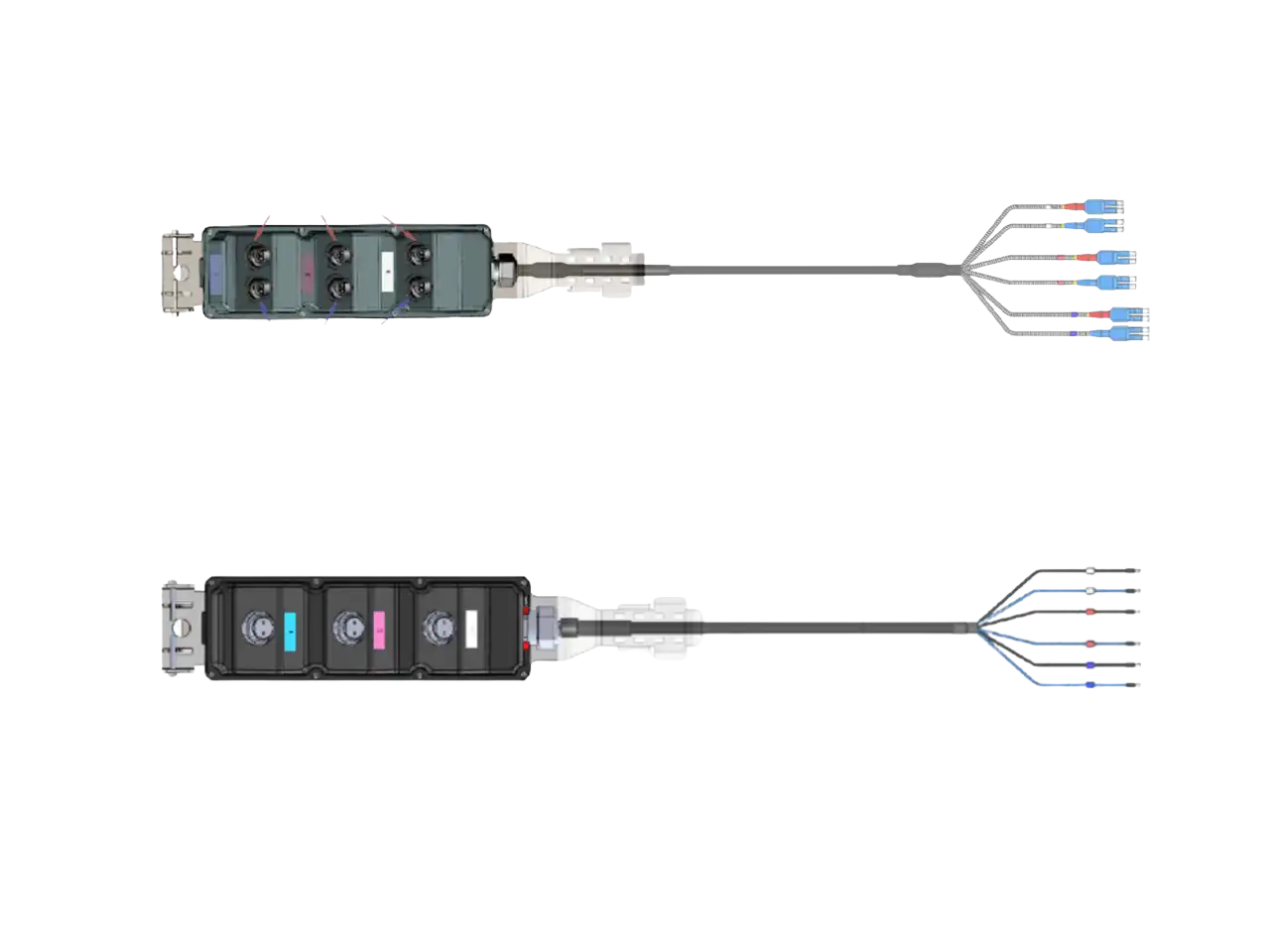
Compact Distribution Assemblies
These assemblies turn HYBRIFLEX from a cable concept into a practical site connection system. By integrating compact distributor elements with fixed-length power or fiber trunk assemblies, they help simplify tower routing, reduce field assembly work, and create a cleaner handoff to remote equipment. This makes them especially useful where installation speed, repeatability, and orderly cable management matter.
It is preassembled outdoor building block with separate power and fiber side elements mounted on the trunk cable itself. It is presented as an easy-installation solution that can be pulled into position and connected with simplified interfaces, while related jumpers, protection covers, storage boxes, and patching elements support a more complete field deployment workflow.
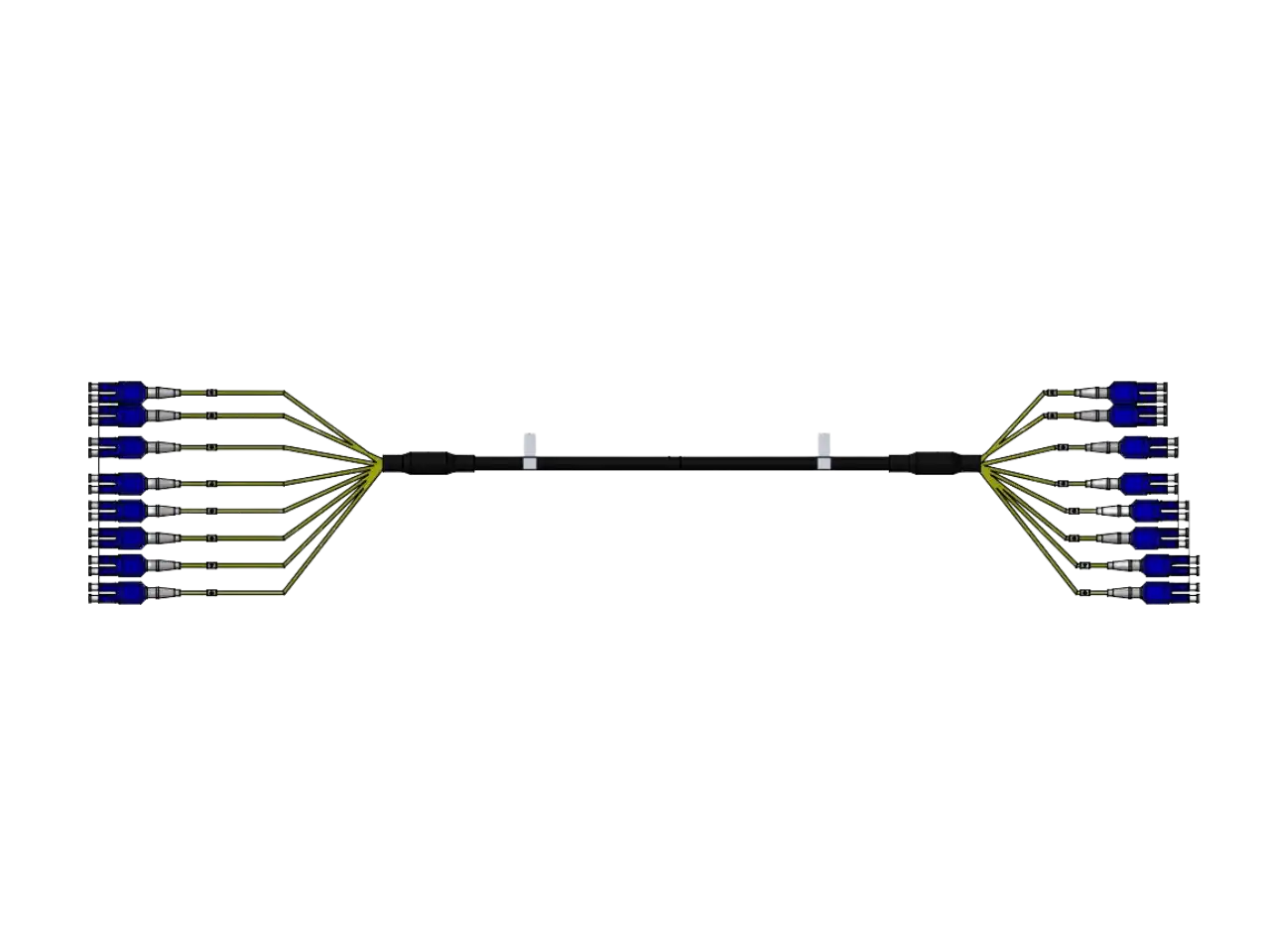
Fiber Trunk and Jumper Assemblies
These assemblies support structured optical routing between active equipment, patching points, and remote connection locations. Within HYBRIFLEX, trunk and jumper elements help reduce site work, keep fiber paths more orderly, and support repeatable installation quality. They are useful where optical connectivity must be deployed cleanly across outdoor radio sites, indoor distribution paths, or mixed infrastructure environments.
Fiber trunks and jumpers are practical connection elements within both outdoor and in-building solution paths, including preterminated and patch-based architectures. That makes them relevant not only for fast rollout, but also for serviceability and controlled network growth, since fiber links can be extended, patched, and reorganized without redesigning the whole cable route.
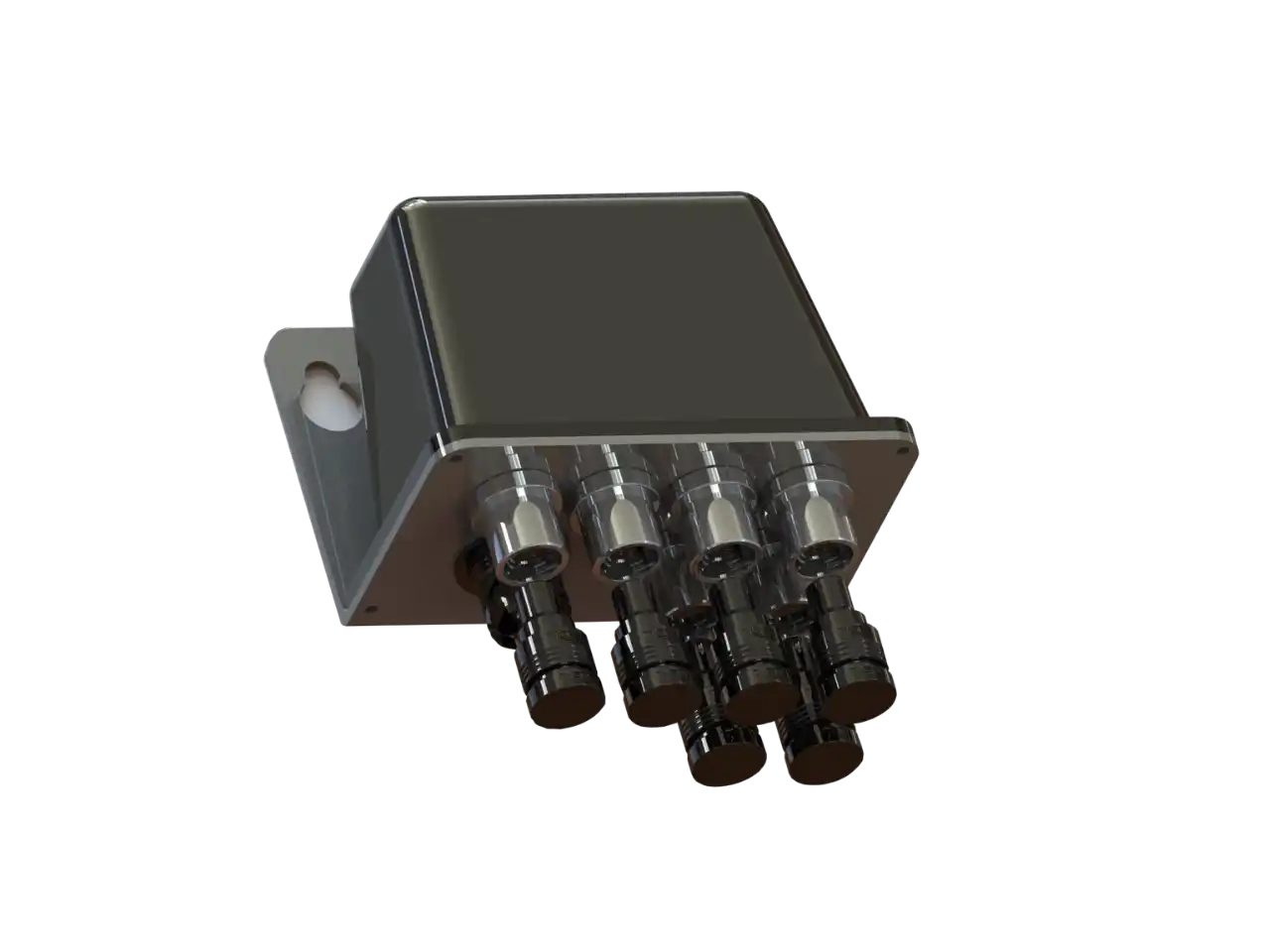
Patch Panels and Termination
Patch and termination elements give HYBRIFLEX installations a controlled interface between trunk infrastructure and active equipment. They help organize fiber handoff, support cleaner service access, and make expansion or reconfiguration easier without disturbing the main cable route. This is especially useful in indoor distribution, technical rooms, and other environments where structured connectivity and maintainability matter.
Patching and termination are part of the wider HYBRIFLEX deployment ecosystem, including patch panels, patch cords, and related indoor fiber components. These elements are important when the installation must stay serviceable over time, since they create defined transition points for testing, rearrangement, and staged growth instead of forcing every change back into the main cable path.
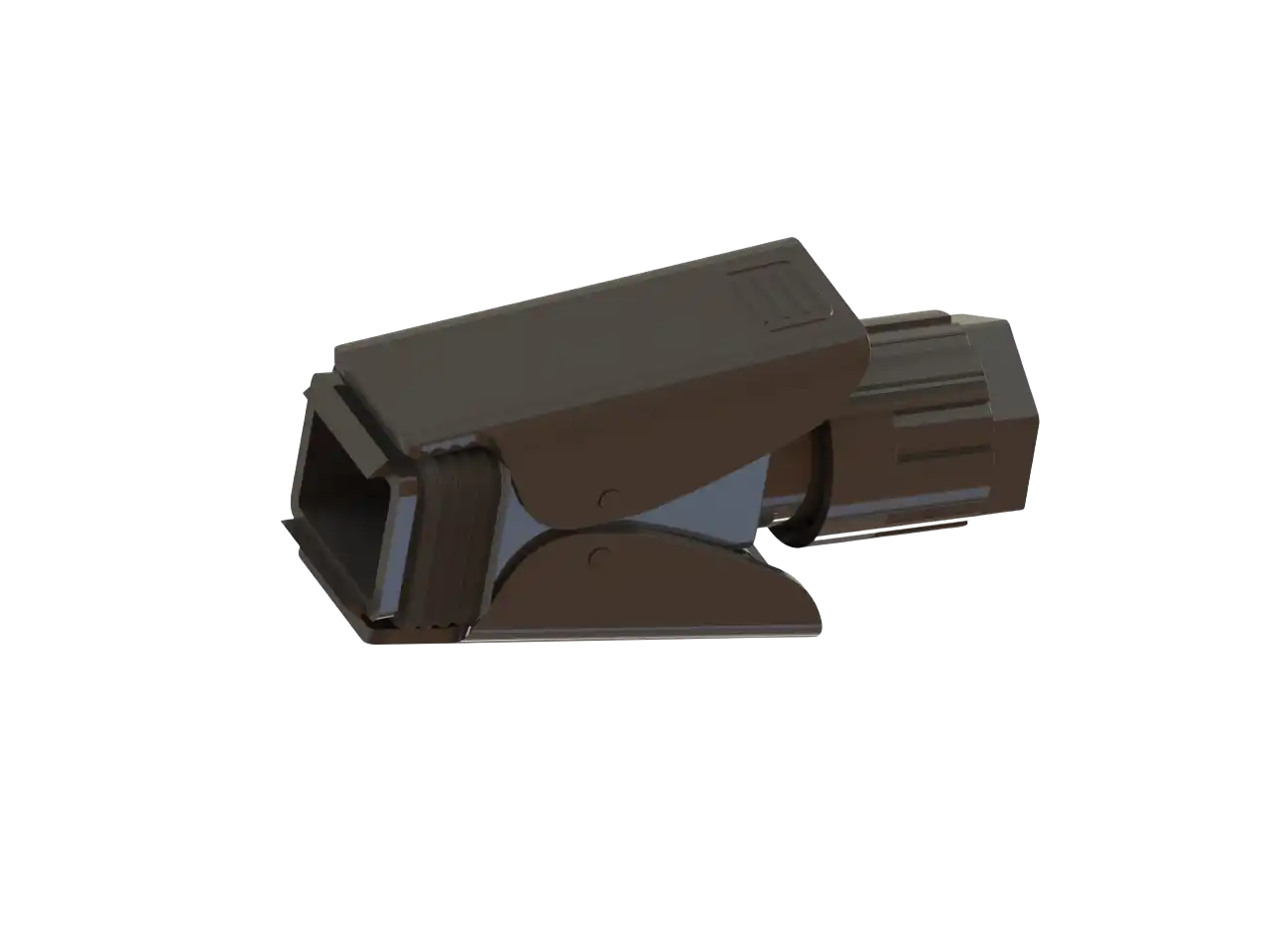
Installation and Protection Accessories
These accessories help HYBRIFLEX installations remain mechanically secure, protected, and easier to handle in the field. They support cable hoisting, grounding, lateral fixing, weather protection, overlength management, and cleaner site finishing. That makes them important not as add-ons, but as practical elements that improve installation quality, long-term stability, and service access across outdoor and indoor deployments.
It is a broad accessory set around the cable system, including hoist grips, ground kits, clamps, bulkhead fittings, weatherproofing items, and specialist installation tools. It also shows outdoor protection covers, fiber storage boxes, patching accessories, and cable preparation tools for jacket and armor work. Together, these elements help protect the installed system, reduce handling risk during rollout, and create a more controlled installation process from first pull to final termination.
Discuss the Right HYBRIFLEX Approach
Discuss whether your project is best served by a fiber-only, power-only, or hybrid approach, and how the supporting assemblies, patching elements, and installation accessories should be structured around it. HYBRIFLEX is most effective when the cable path, termination method, service access, and rollout model are considered together rather than selected as isolated parts.