
Fujikura One-Click Cleaners
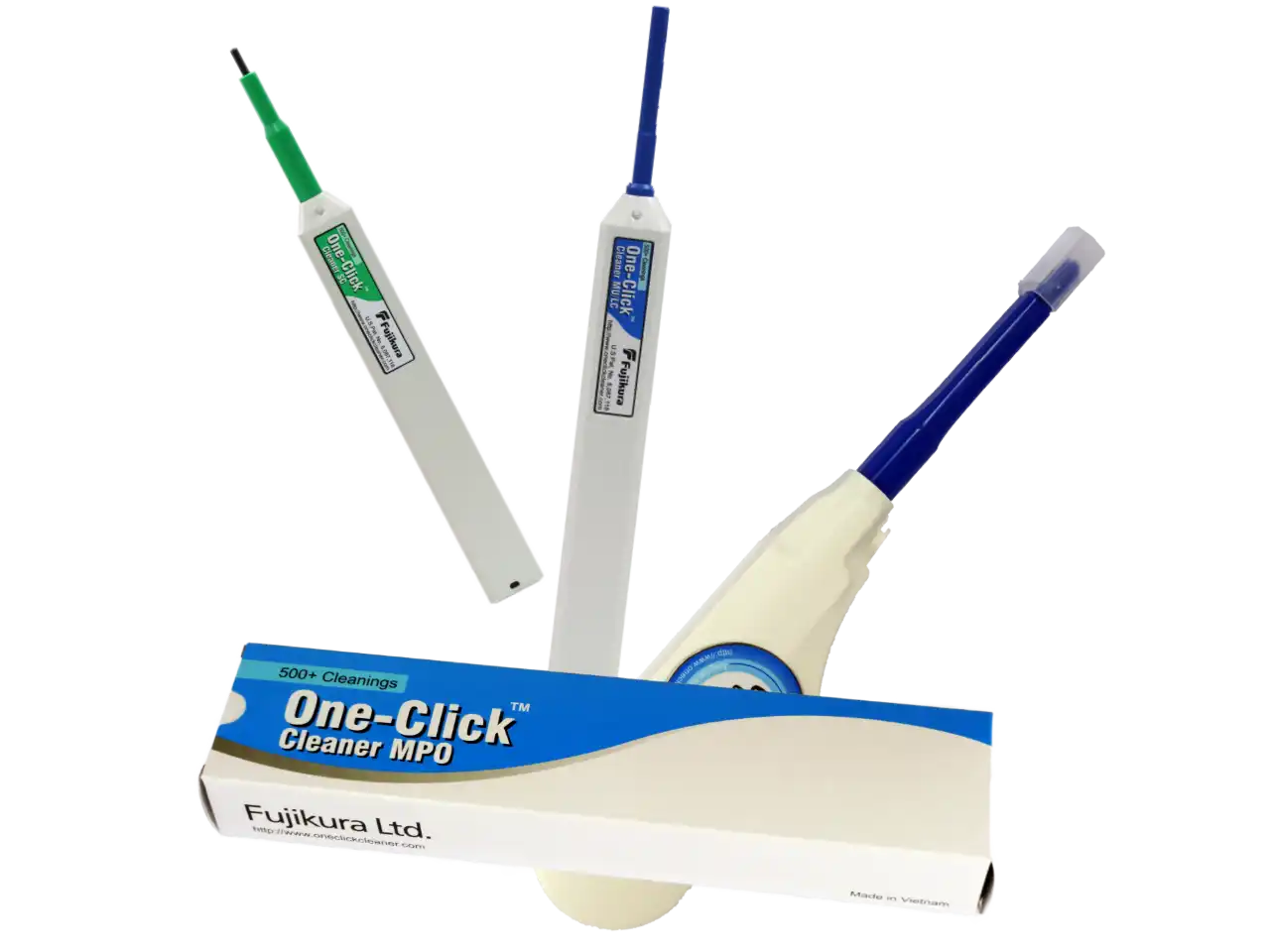
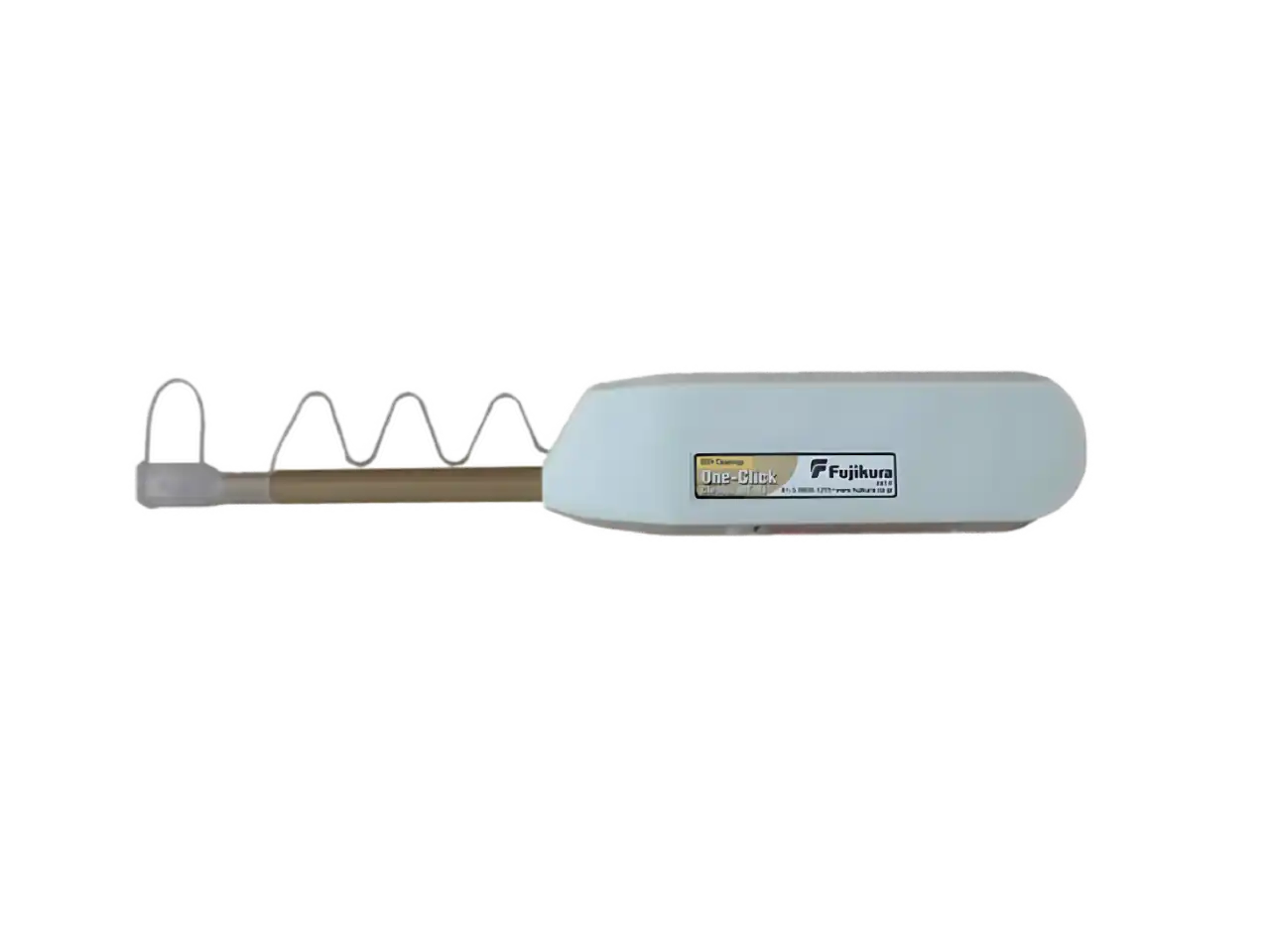
Fujikura One-Click Cleaners are dry mechanical tools for cleaning fibre connector end-faces before testing, patching, commissioning, and maintenance work. Their role is simple but important: remove dust, oil, and other removable contamination from connector interfaces and optical ports before they affect insertion loss, reflectance, measurement stability, or general link reliability. In real field use, this matters not only on patch cords and connectors under test, but also on instrument ports and adapter-side interfaces that are easily neglected. Best practice treats both connector end-faces and optical ports on test equipment as routine cleaning targets before connection and testing.
The One-Click family covers standard single-fibre connectors, MPO variants, and newer high-density formats, so cleaner choice can be matched to the actual interface instead of using one generic tool everywhere. This is also relevant in IEC 61300-3-35 inspection workflows: the standard defines end-face inspection pass/fail criteria before connection, while field best practice is to inspect every connector, clean when contamination is present, and reinspect before use. In practice, these cleaners support that workflow and help reduce unnecessary troubleshooting, unstable measurements, and avoidable port damage.
Why Fujikura One-Click Cleaners remain widely used
One-Click cleaners remain relevant because they solve a basic but important problem in optical field work: contamination must be removed quickly, repeatably, and with the correct tool for the interface in use. Their value is not only speed, but controlled cleaning action, practical access to connectors and ports, and better routine discipline before testing, patching, and service activation.
Fast field handling
A dry one-push cleaning method fits real installation, maintenance, and patching work where technicians need a tool that is quick to use, easy to carry, and practical in repetitive daily handling.
Rotating tip action
Unlike some alternatives, the cleaning media is not only advanced forward. The mechanical push action also rotates the cleaning tip, helping clean the connector end-face while keeping the contact controlled and gentle.
Connector-specific
The family covers standard single-fibre connectors, MPO interfaces, and newer high-density formats, making it easier to choose a cleaner that actually matches the connector instead of relying on one generic tool.
Not only patch cords
These cleaners are relevant not only for connector end-faces on jumpers and links under test, but also for adapter-side cleaning and optical test equipment ports used in routine measurement workflows.
Fujikura One-Click Cleaner variants and where they fit
The Fujikura One-Click family includes variants for standard single-fibre connectors, higher-use cleaning routines, MPO environments, and newer high-density interfaces. The differences between these variants are primarily related to connector format, access geometry, cleaning frequency, and the working conditions in which the cleaner is used.
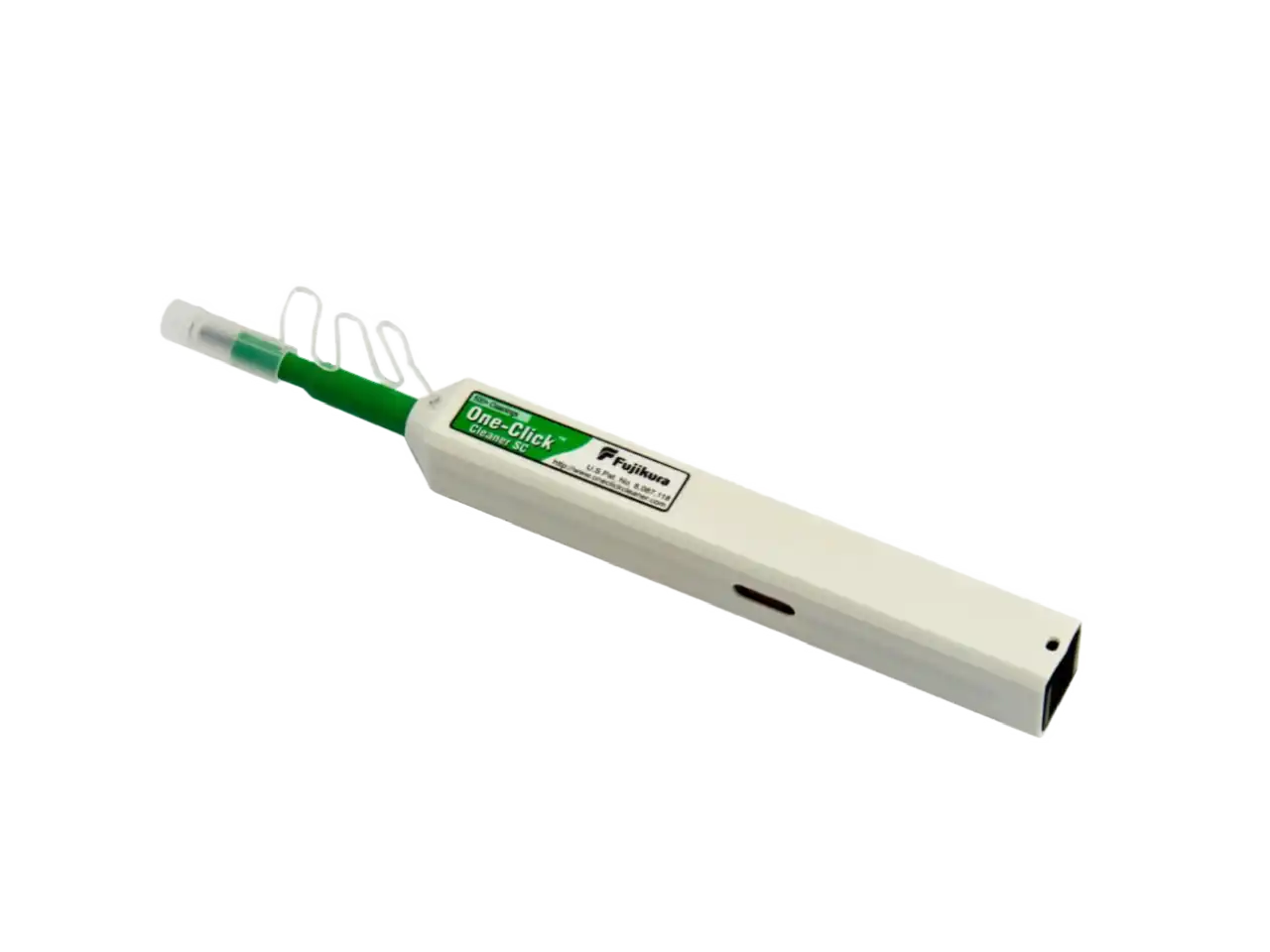
Standard single-fibre cleaners
Standard One-Click variants fit routine cleaning of common single-fibre connector interfaces used in installation, patching, activation, and maintenance work. Typical examples include OneClick Cleaner SC/ST/FC, OneClick Cleaner MU/LC, OneClick Cleaner SC MINI, and OneClick Cleaner MU/LC MINI.
This group covers typical day-to-day connector cleaning where the main requirement is reliable end-face cleaning on common interfaces rather than a specialised tool for dense or uncommon connector formats. In practical use, these are the general-purpose cleaners most likely to be carried in regular fibre installation, service, and testing kits.
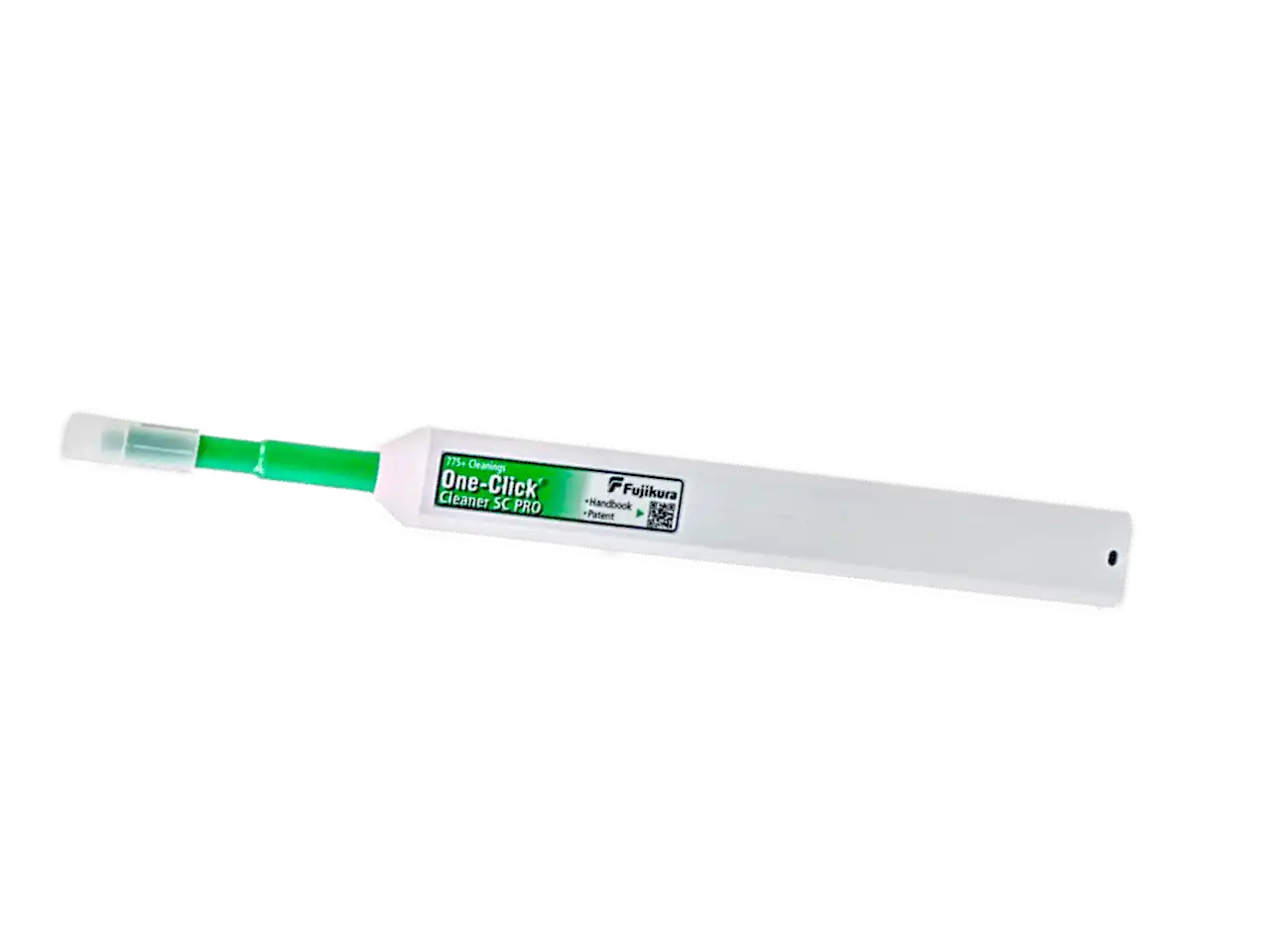
PRO variants
PRO versions fit users who clean frequently and want higher cleaning capacity in repeated daily work. Practical examples include One-Click Cleaner for SC PRO and One-Click Cleaner for LC PRO, which are intended for more intensive routine use than standard variants.
The difference here is mainly operational rather than architectural. PRO variants are more suitable where the cleaner is used often enough for extended cleaning life to have practical value, such as in repetitive maintenance, preparation work, patch-panel handling, or higher-frequency connector cleaning workflows.
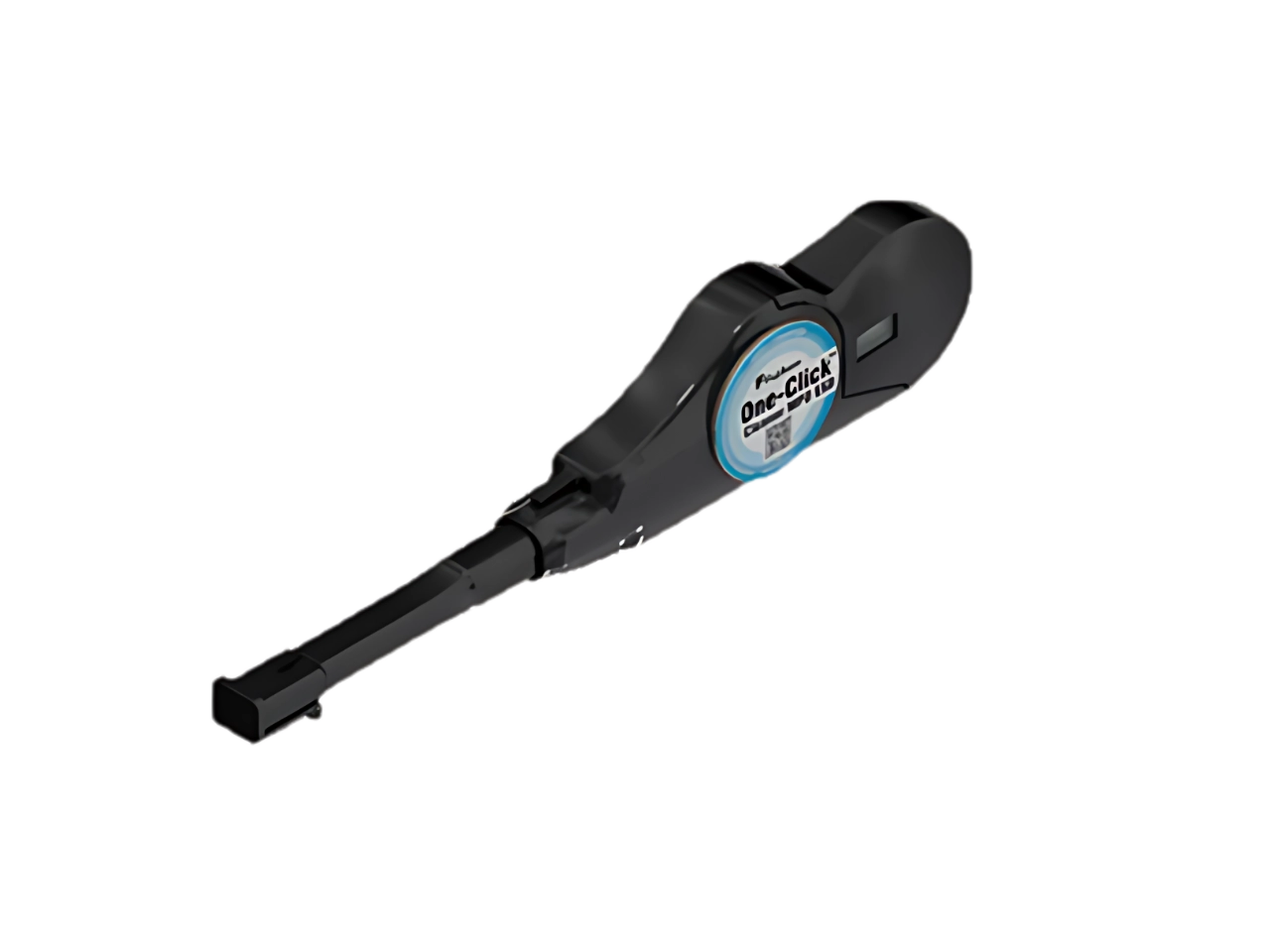
MPO and ESD-sensitive environments
MPO-oriented variants fit higher-density fibre environments where connector geometry and access differ from standard single-fibre work. Typical examples include One-Click Cleaner for MPO, One-Click Cleaner for 16f MPO, and One-Click Cleaner for ESD-MPO where static-sensitive handling is also relevant.
These variants are intended for environments where connector density, interface design, and handling conditions differ from ordinary single-fibre patching. In such cases, correct tool fit improves access, cleaning consistency, and handling control, especially around active equipment, transceiver-adjacent interfaces, and structured high-port-count installations.
Compact multi-fibre and high-density formats
Variants for compact connector formats fit denser connectivity environments where generic cleaning tools become less suitable. Examples include One-Click Cleaner for CS & MDC, One-Click Cleaner for SN, One-Click Cleaner for MMC 12/24f, and One-Click Cleaner for MMC 16f.
These cleaners are relevant where reduced connector size and tighter packing density change how the end-face is accessed and cleaned. In practical terms, they extend the One-Click family into optical environments where traditional single-fibre cleaner formats are no longer the most suitable option for precise and repeatable cleaning work.
Where Fujikura One-Click Cleaners add practical value
One-Click cleaners are used in routine fibre work before measurement, patching, commissioning, and fault isolation. Their practical value appears most clearly where connector cleanliness affects test credibility, where optical ports are exposed to repeated field handling, and where cleaning also helps limit avoidable handling damage.
Before testing and activation
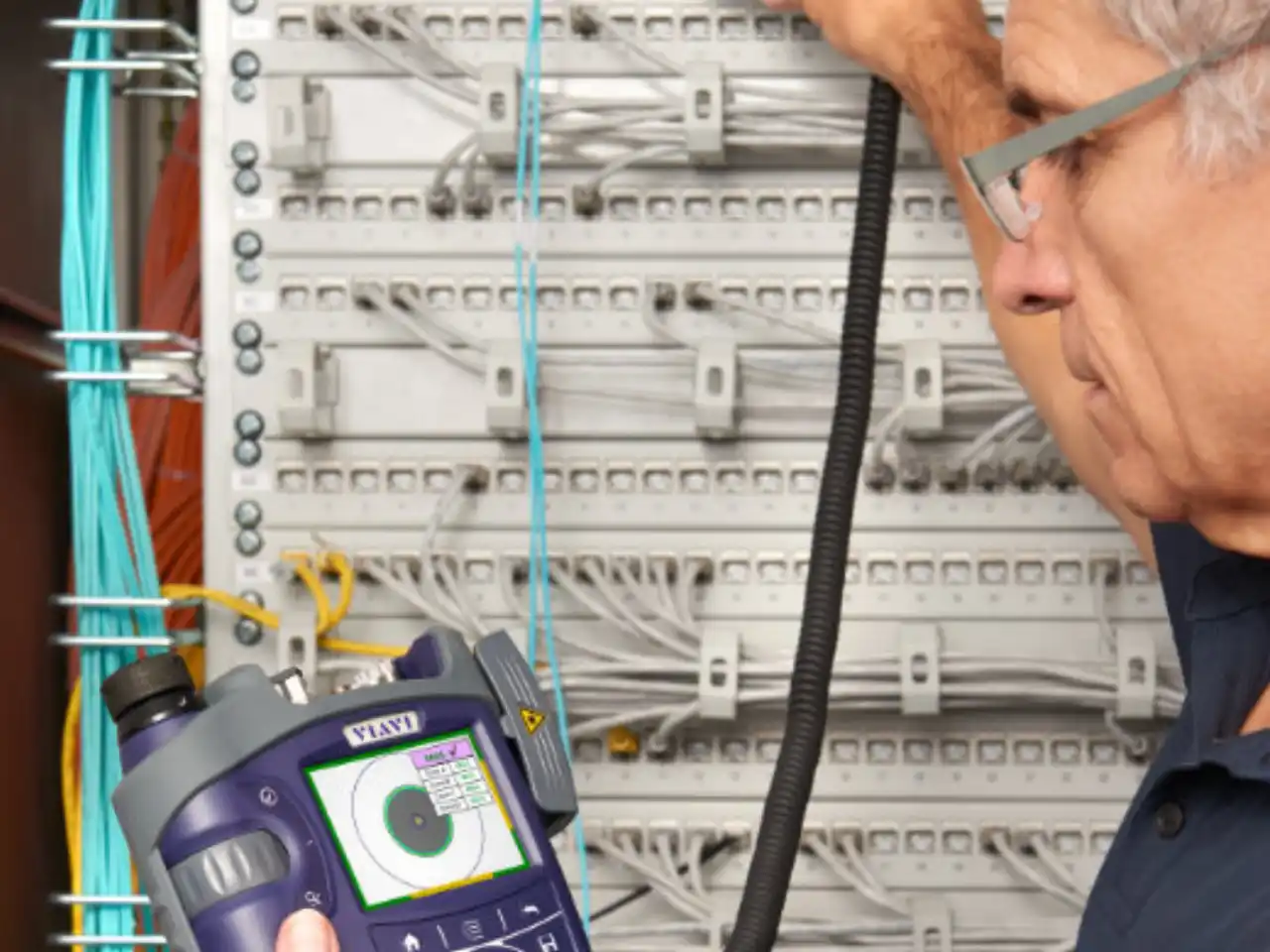
Connector cleaning is a normal preparation step before optical measurement, service activation, and troubleshooting. Contamination on connector end-faces and optical ports directly affects optical performance, measurement reliability, and the stability of test results.
In practice, this applies to patch leads, launch and receive cables, connectors on the fibre under test, and instrument-side interfaces that are used repeatedly in field work. The purpose is not cosmetic. Cleaning helps reduce false failures, unstable readings, and unnecessary troubleshooting caused by removable contamination rather than actual link faults.
Test equipment ports and adapters
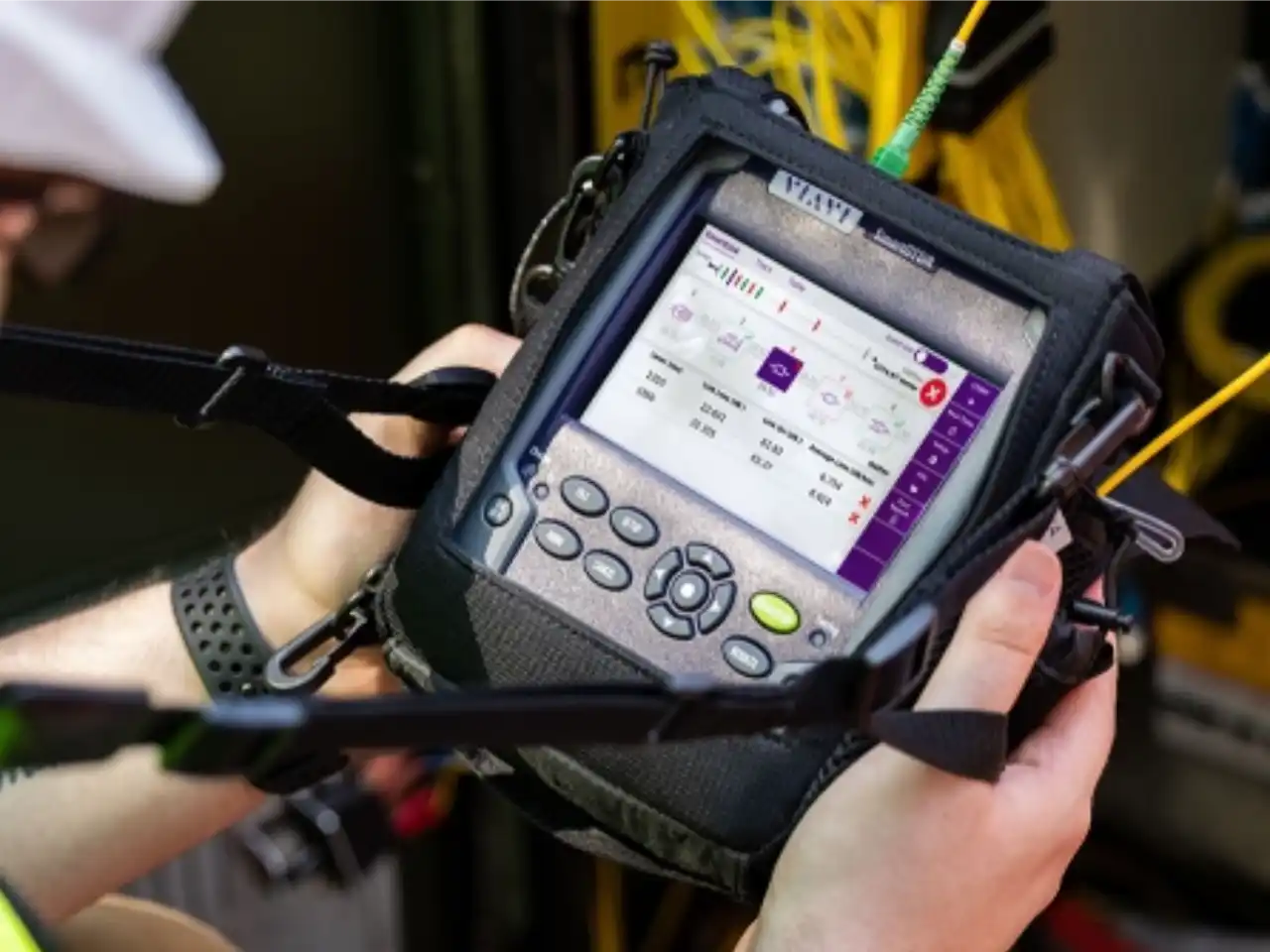
One-Click cleaners are relevant not only for free connector end-faces, but also for optical adapters and test equipment ports used on OTDRs, light sources, VFLs, and similar instruments. These are routine cleaning points in normal fibre test workflows.
This is one of the more practical maintenance use cases, because instrument ports are easy to overlook and expensive to damage. Replacing a damaged optical test port can easily cost several hundred euros, so regular cleaning is usually far cheaper than avoidable repair. Where adapter-side access is possible, correct cleaning method and tool choice also matter.
Handling control in dense field work
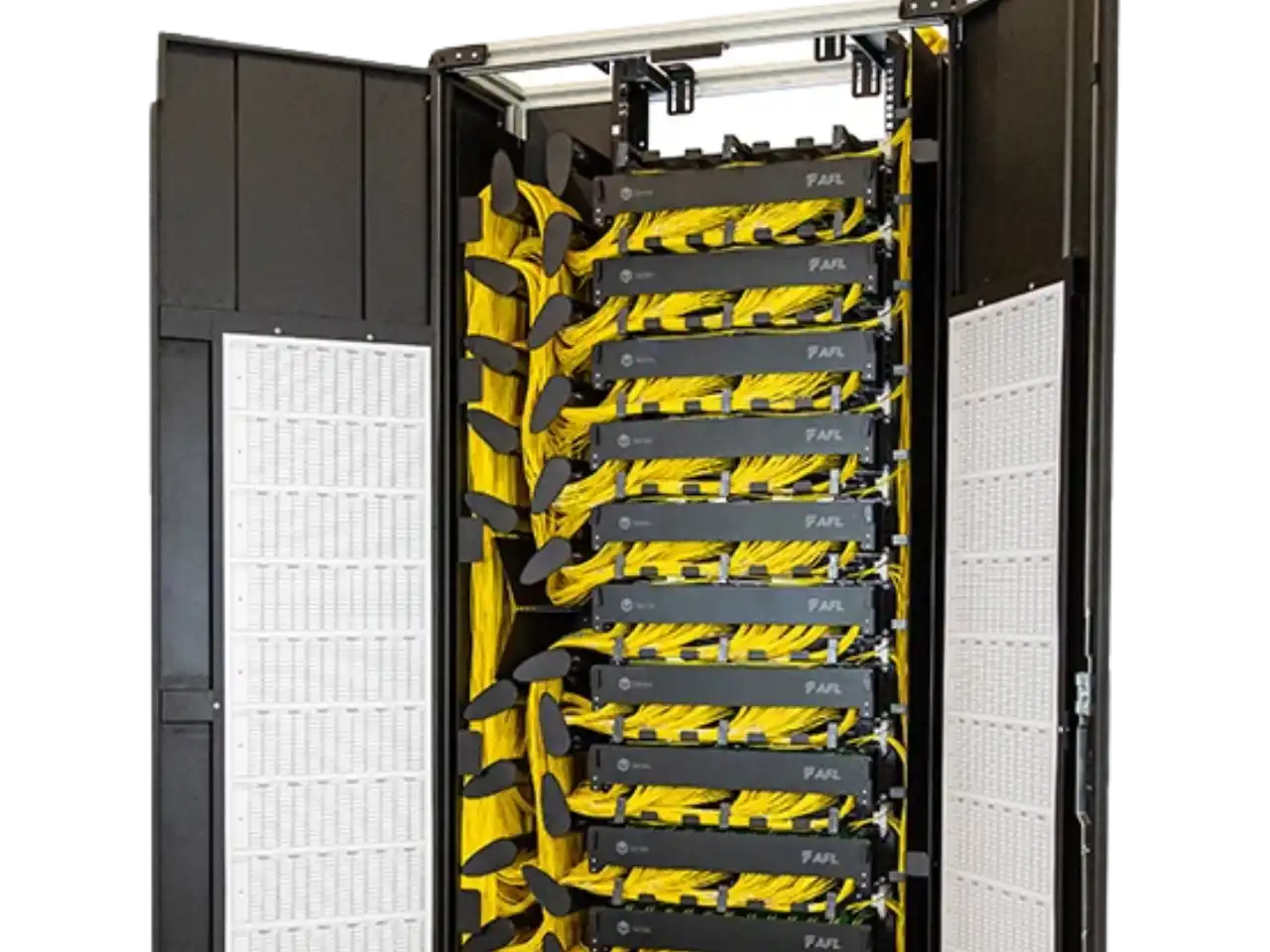
Cleaner design also matters in everyday handling. The Fujikura One-Click Cleaners design helps absorb excess stress caused by off-axis insertion instead of transferring it directly to the alignment sleeve or ferrule, which is a useful protection feature in real service conditions.
That does not remove the need for proper technique. Angled insertion can still damage the cleaner tip, shorten cleaner life, or make the cleaning strand unusable. Even so, the design remains relevant in dense patching and test environments where connectors are accessed repeatedly and user handling is not always ideal.
Cleaning removes contamination, not damage
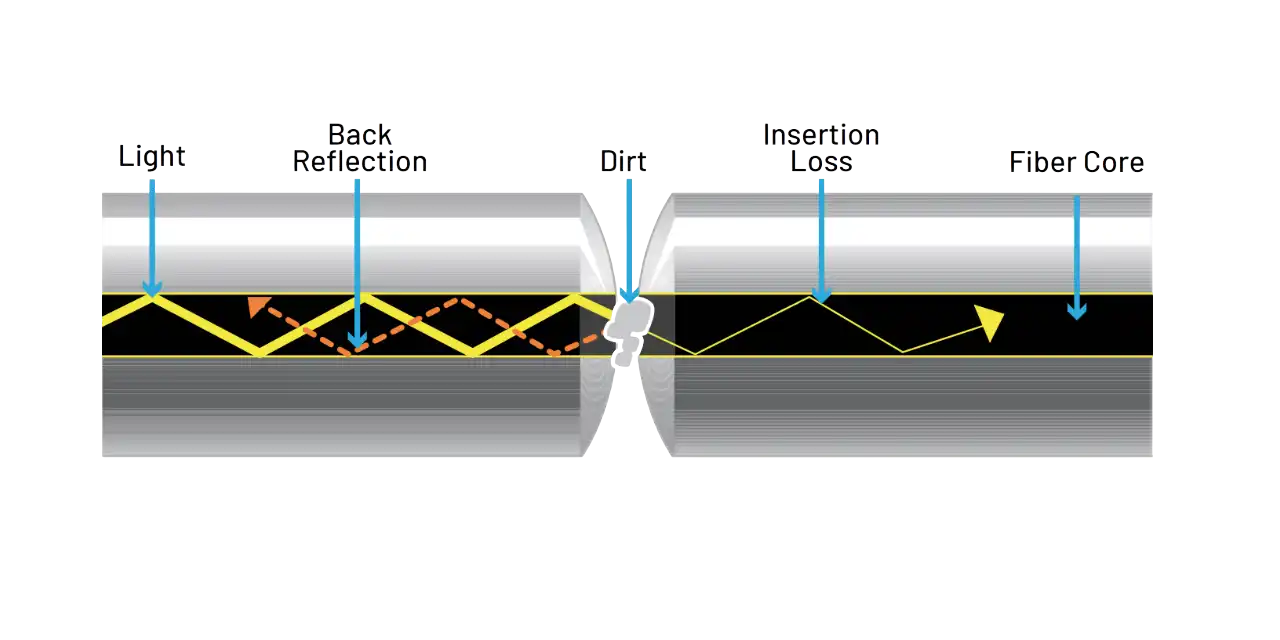
One-Click cleaners work best as part of a disciplined inspect-clean-reinspect workflow. Before connection, measurement, or IEC 61300-3-35 end-face evaluation, the connector condition must be checked and removable contamination addressed correctly. Cleaning removes dust, oil, and other surface contamination, but it does not correct permanent defects such as scratches, pits, chips, or other end-face damage.
In practical work, this distinction matters because not every failed end-face can be recovered by further cleaning. A cleaner is a maintenance tool, not a repair method. Used correctly, it supports more reliable inspection results, reduces avoidable troubleshooting, and helps maintain better connector and port condition across repeated field and test use.
Need the right cleaner for your connector format?
We help match Fujikura One-Click cleaners to actual connector types, cleaning frequency, and working conditions. That includes standard single-fibre connectors, MPO environments, compact high-density formats, and routine use around test equipment ports and adapters.