
Iris 25 Bidirectional Converter for Bulk Long-Distance Energy Sharing
The Iris 25 Bidirectional Converter is a highly efficient, modular DC/DC solution designed to bridge standard 48VDC battery systems with high-voltage 380VDC distribution buses. Delivering 2.5 kW per module with a peak efficiency of over 96%, this versatile converter allows power to flow seamlessly from 48V to 380V (Step-Up mode) or from 380V to 48V (Step-Down mode) based on real-time system demands.
Engineered specifically for the evolving energy landscape, the Iris 25 Bidirectional Converter enables the unique concept of “energy sharing over very long distances.” By stepping up native 48V battery power to 380VDC, transmission losses are drastically reduced, allowing bulk power to be moved efficiently over kilometers. A second Iris system at the remote end converts the high voltage back to 48V to secure the load. This conversion process is fully repeatable, allowing for decentralized, redundant power distribution across extensive industrial, telecom, or microgrid infrastructures.
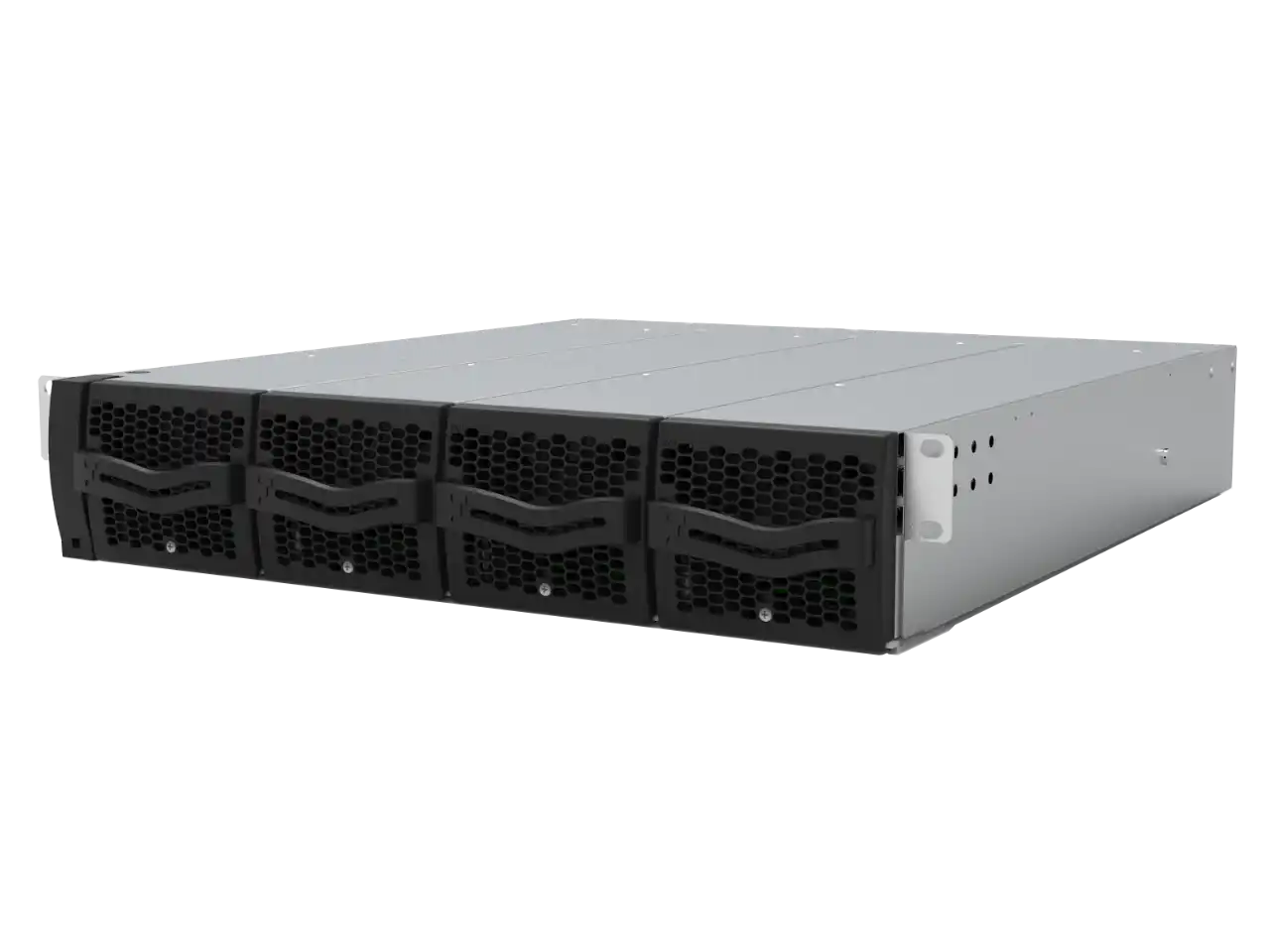
Dynamic Bidirectional Efficiency and Modular Resilience
The Iris 25 Bidirectional Converter utilizes a high-density, modular design to deliver resilient power conversion between 48V and 380VDC infrastructure. It combines exceptional conversion efficiency with decentralized droop logic to ensure autonomous load sharing and absolute continuity for bulk energy distribution.
Fully Bidirectional Operation
Seamlessly transfers 2.5 kW of power per module in either direction between 48V and 380V buses, enabling versatile energy management strategies.
Decentralized Power Sharing (TRS)
Utilizes a sophisticated droop current sharing algorithm, ensuring balanced operation when paralleled and eliminating any single point of failure (True Redundant Structure).
High Power Density
Compact design allows for high-capacity integration within standard shelves, enabling rapid modular scaling up to bulk power capacity for utility-scale applications.
Industrial-Grade Efficiency
Achieves a peak efficiency exceeding 96% in both Step-Up and Step-Down modes, significantly minimizing thermal waste and operational energy costs.
Wide DC Operating Windows
Handles fluctuating input/output voltages with native ranges designed to accommodate battery charge cycles and transmission line voltage drops.
Advanced Control Telemetry
Integrates with CE+T Inview controllers for granular monitoring of power flow, module status, and historical data logging via standard industrial protocols.
IRIS 25 Bidirectional Converters – Centralized Resilience for Distributed Infrastructure
The Iris 25 Bidirectional Converter solves the critical challenge of providing backup power to widely distributed loads where installing separate battery banks at every location is unreasonable due to cost, space constraints, maintenance demands, or environmental conditions. By utilizing highly efficient 380VDC transmission, the system centralizes energy storage while SECURING critical remote equipment across sprawling telecom and industrial landscapes.
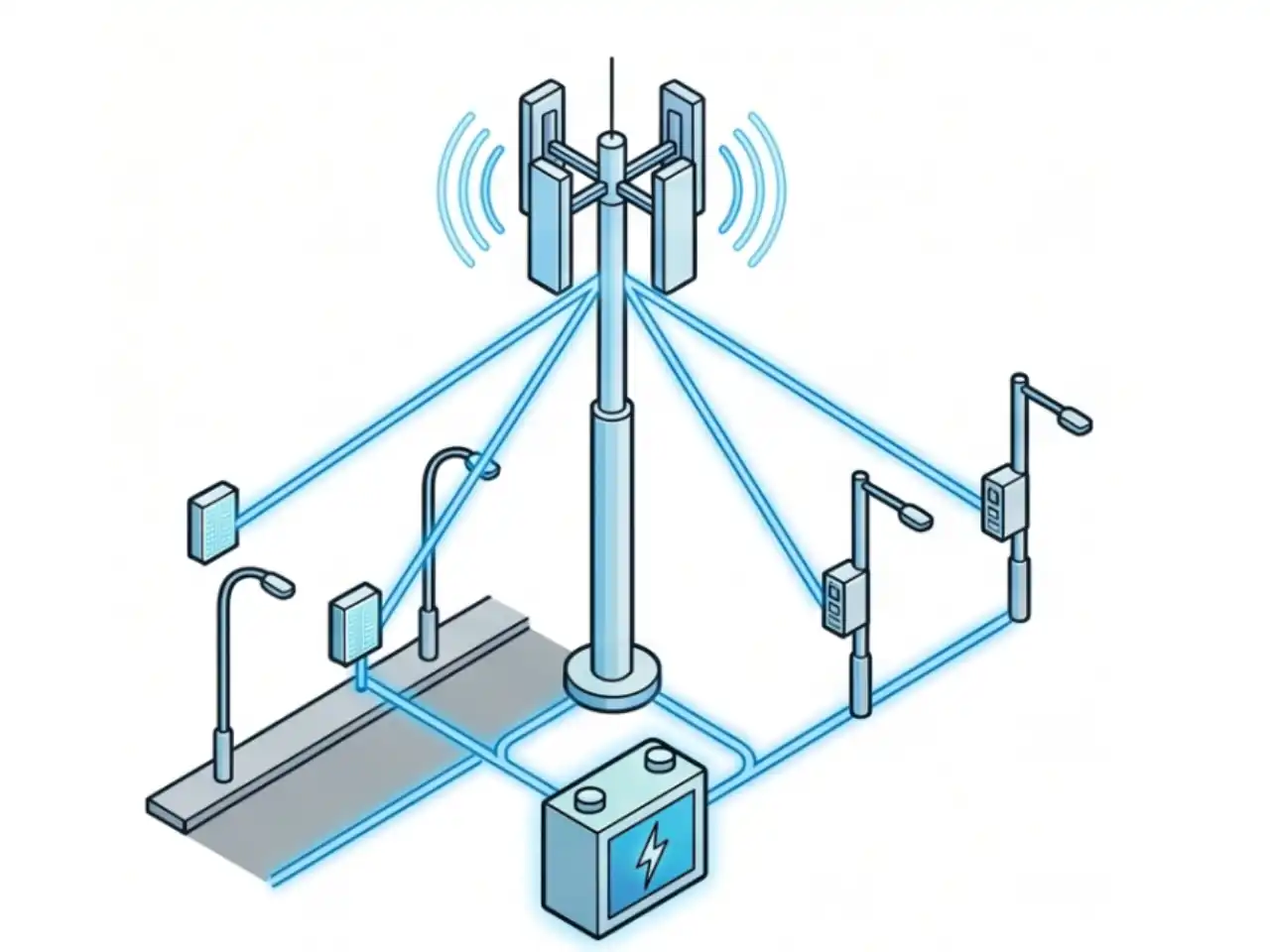
5G Small Cell & Edge Distribution
Power dense 5G millimeter-wave small cells along city streets or highways without placing batteries on every pole. The Iris steps up power from a central hub to transmit efficiently to multiple remote nodes, where localized Step-Down ensures 48V continuity.
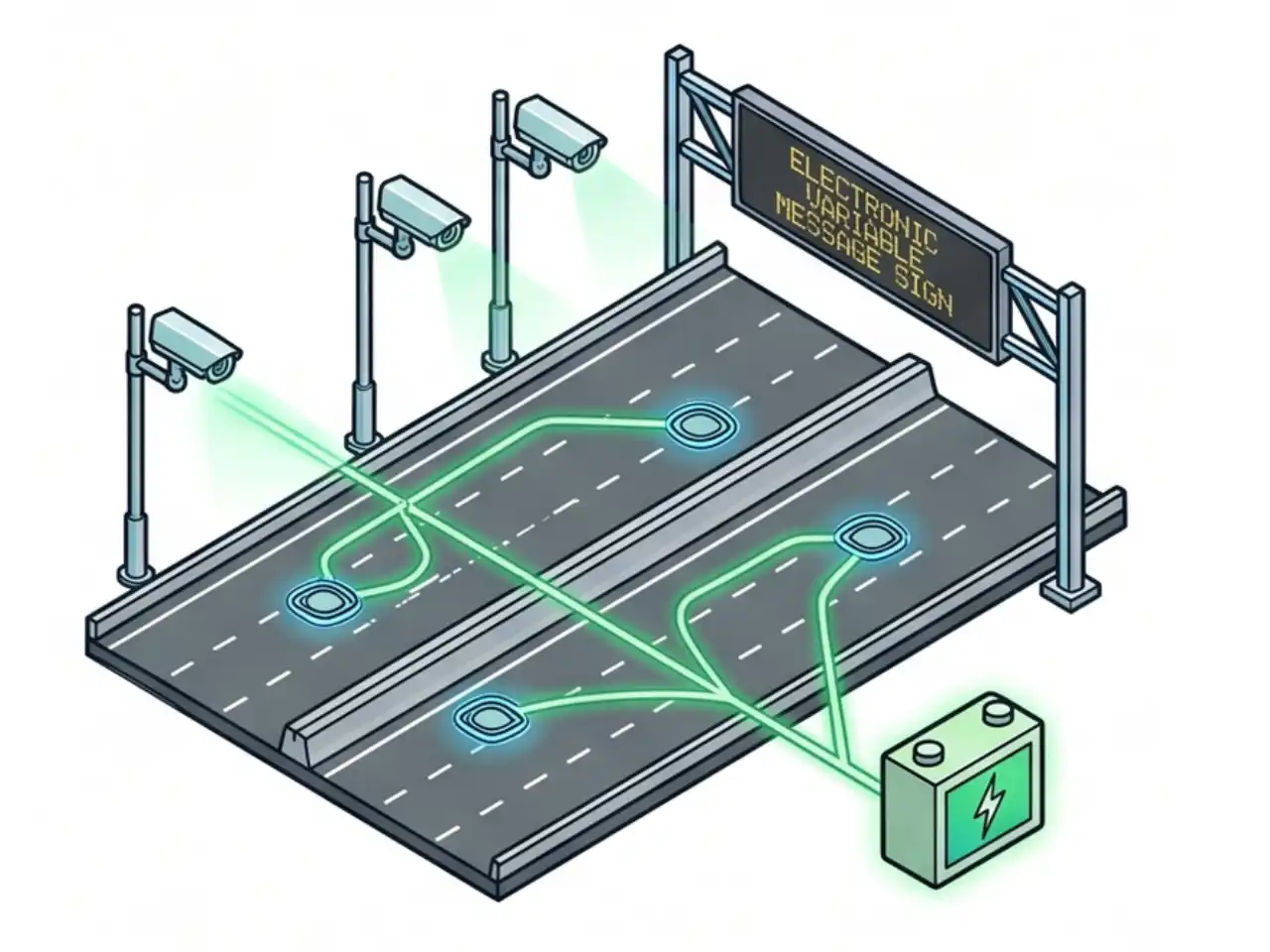
Smart Roads & Traffic Management
Provide redundant power to distributed smart road sensors, cameras, electronic signage, and tolling gantries over kilometers. Centralizing the battery assets simplifies maintenance and ensures high availability for critical transportation control systems.
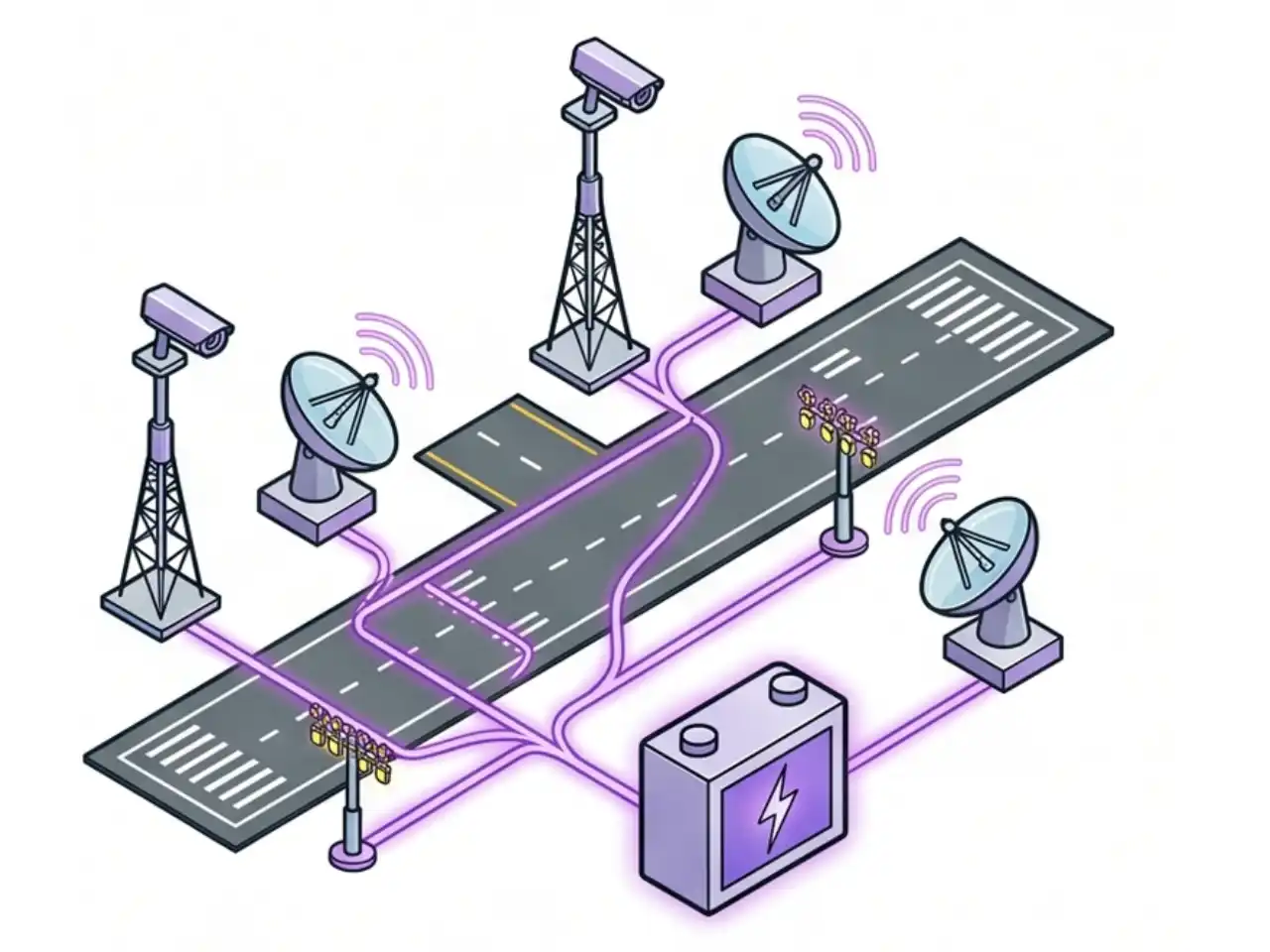
Sprawling Facilities (Airports & Ports)
Secure critical navigation aids, distributed security systems, and communication nodes across massive airport tarmacs or shipping ports. The system eliminates the logistical burden of maintaining hundreds of localized battery installations in difficult-to-access areas.
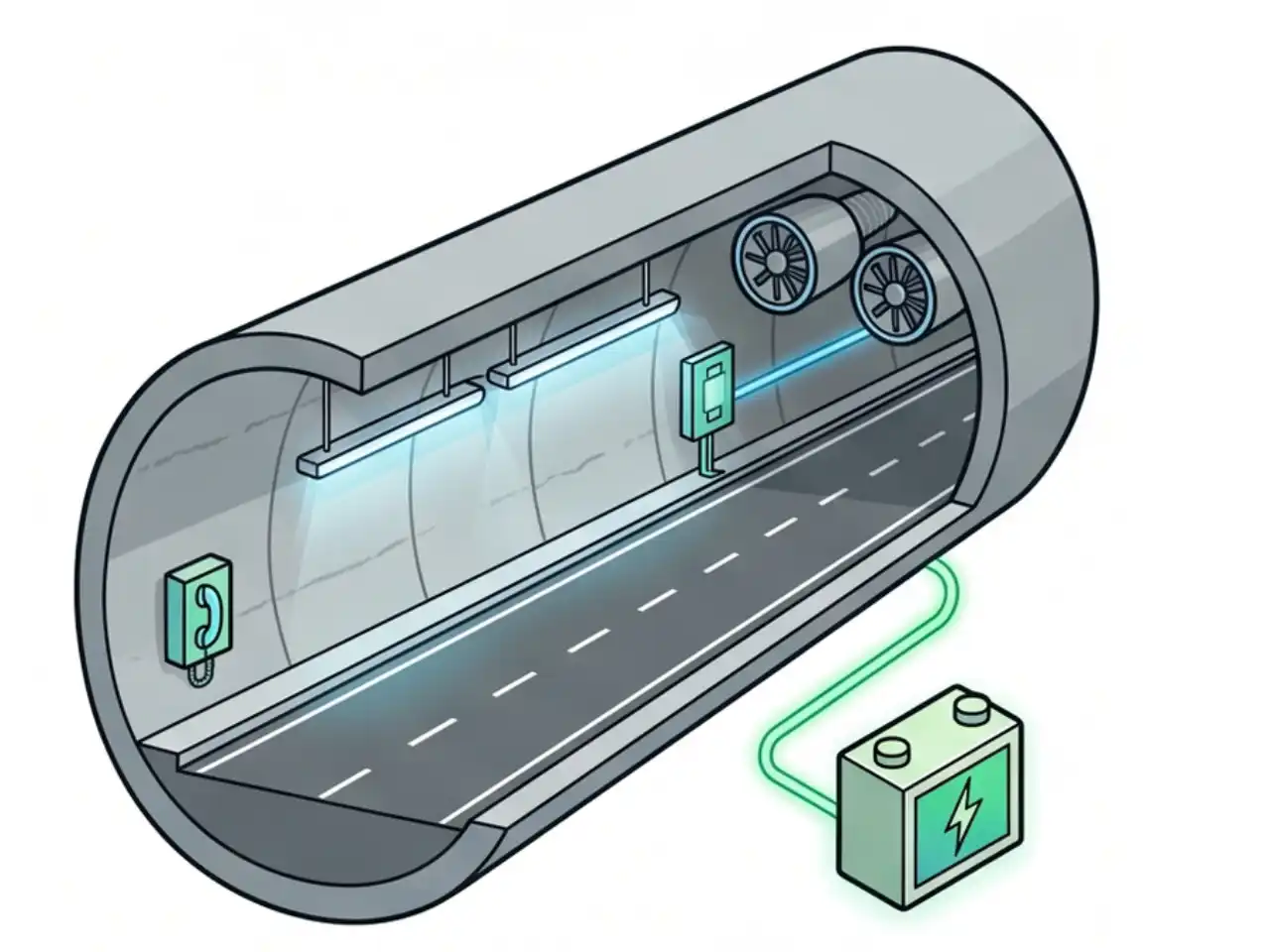
Tunnels & Long-Distance Linear Assets
Efficiently power lighting, ventilation control systems, and emergency communications throughout long road or rail tunnels. The repeatable Step-Up/Step-Down process allows power to be daisy-chained over extreme distances where localized storage is impractical.
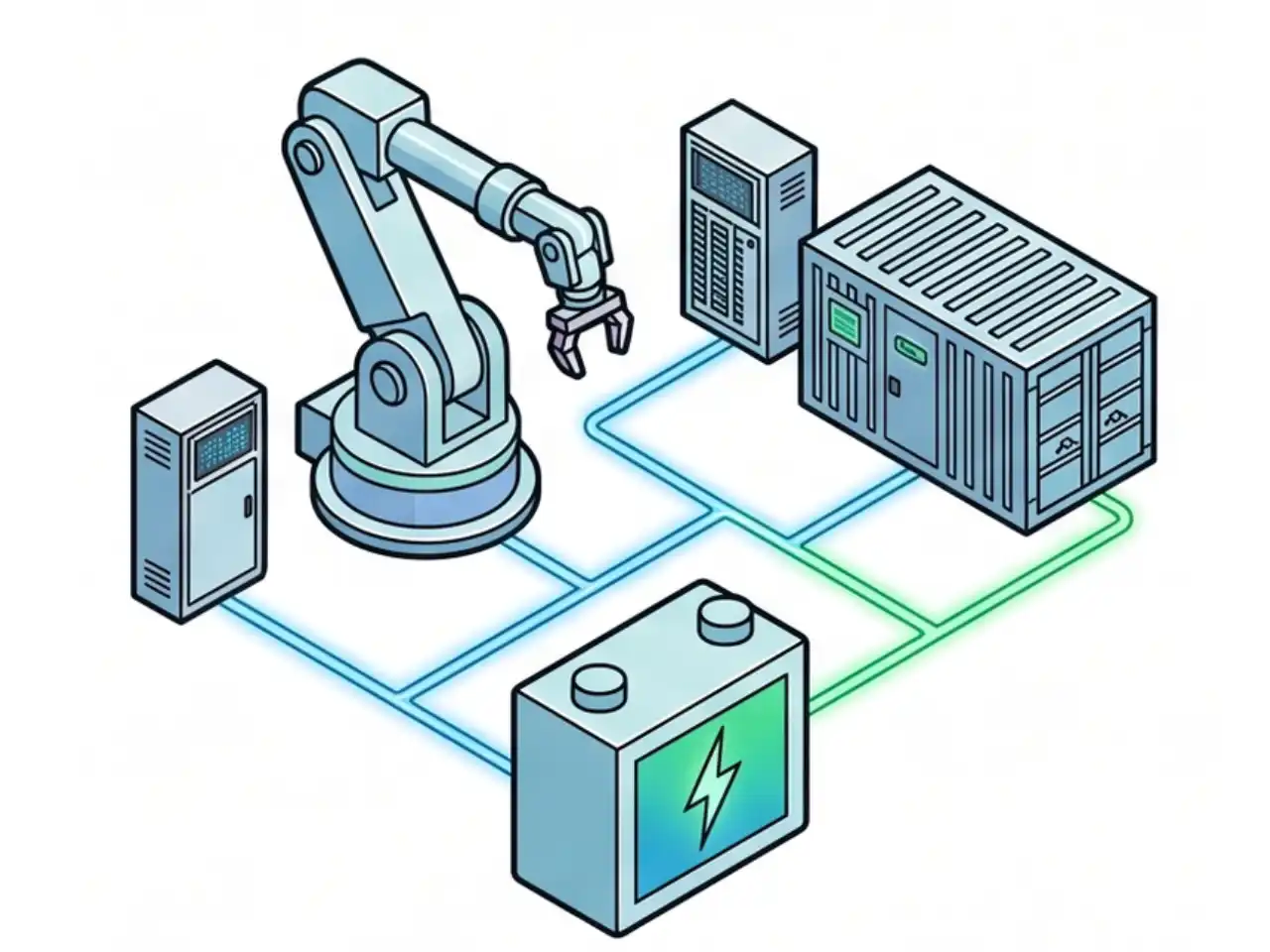
Industrial Production & Modular City Solutions
Secure distributed PLC control cabinets and assembly robots across massive factory floors or within modular, containerized city data centers. This architecture allows for a single, well-maintained centralized battery asset to back up dozens of independent, decentralized loads.
The Droop Algorithm: True Redundancy Without Intercommunication
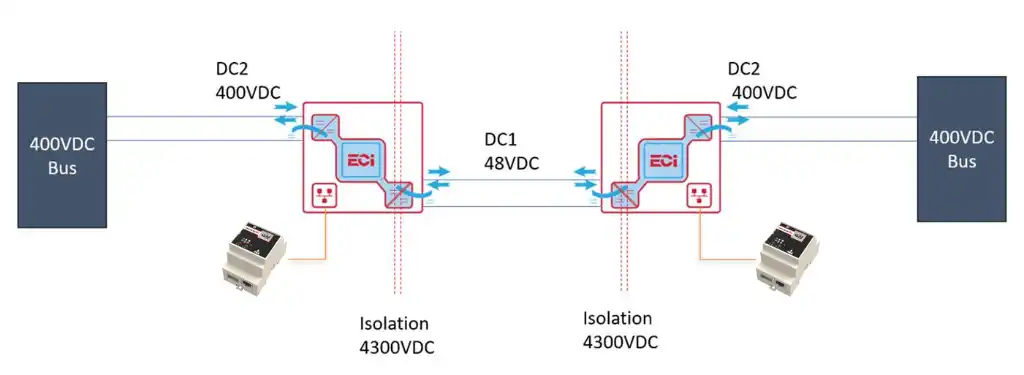
The reliability of the Iris 25 system is not dependent on a master controller. It utilizes a decentralized droop current sharing algorithm. Every module operates based on its own independent measurement of the DC bus voltage.
When parallel modules are active, they subtly “droop” (reduce) their output voltage slightly as the load current increases. Because all modules use the same droop curve, they naturally converge to share the load equally. This decentralized logic ensures that if one module fails, is hot-swapped, or is disconnected, the remaining modules immediately and automatically redistribute the load based on their local measurements. This creates a True Redundant Structure (TRS) that provides industrial-grade resilience with no single point of failure.
Managed by the Inview controllers, these modules can be integrated into high-density shelves to build robust, redundant bulk conversion stations for step-up or step-down plants.
Designing your bidirectional DC architecture?
Consult with our engineering team to design modular bidirectional power systems using the Iris 25. We provide technical expertise in configuring decentralized, droop-managed plants for seamless 48V and 380VDC integration and efficient long-distance energy sharing.