
Sierra 25: Modular 3-Port Multidirectional Power Conversion Platform
Sierra 25 Multidirectional Converters provide a high-density, bidirectional power architecture designed to secure critical infrastructure through simultaneous AC and DC load management. Built on a unique triple-port architecture, every module integrates two AC ports and one DC port that function concurrently as both input and output. This design allows the system to operate as a dynamic energy hub, SECURING mixed AC and DC loads while facilitating energy flow between the grid, battery storage, and renewable sources. The platform achieves world-class power density, utilizing a 2U building block power shelf that delivers up to 12 kVA of capacity within a standard 19-inch rack width
The Sierra 25 is engineered for high-availability environments using a True Redundant Structure that eliminates the need for a centralized master-slave controller. This decentralized logic ensures that every module operates independently; in the event of a monitoring unit failure or disconnection, the system maintains total load continuity by operating in a pre-programmed fallback mode. Certified as Grid Interactive for major international standards, the platform supports 48V, 110V, and 380VDC environments. This versatility makes it a technical foundation for commercial microgrids, peak shaving, and phase balancing applications, with modular scalability reaching up to 2 MW.
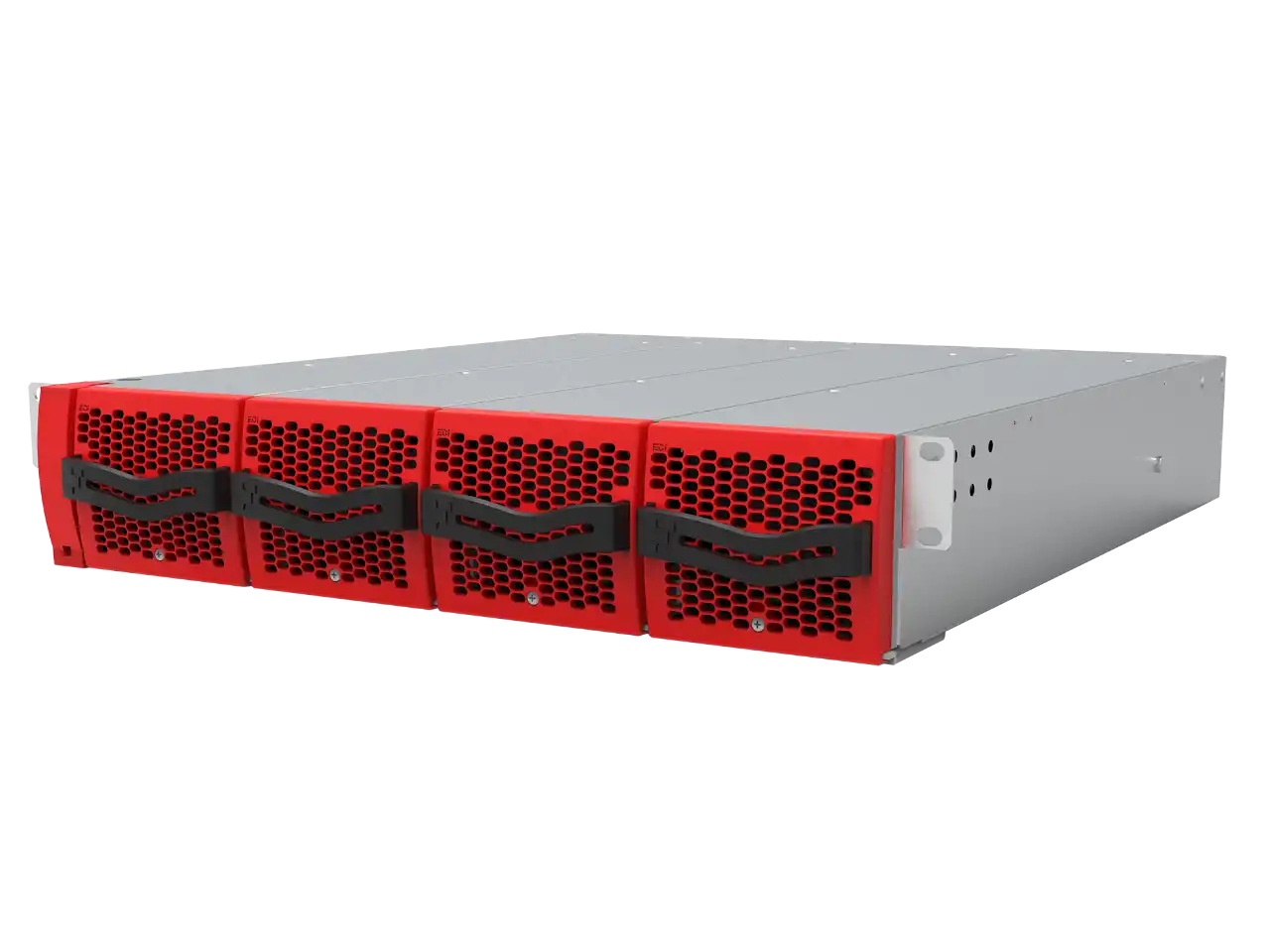
Sierra 25 Multidirectional Converter – Grid-Interactive Performance and Multidirectional Energy Routing
Sierra 25 Multidirectional Converters utilize a high-density 3-port architecture to provide unified energy management with industrial-grade resilience and efficiency.
Multidirectional Architecture
Three bidirectional ports (two AC, one DC) enable dynamic energy routing between any combination of power sources and loads.
Automated Energy Sharing
An internal DC buffer SECURES mixed AC and DC loads by automatically balancing power from grid, renewable, and battery sources.
Certified Grid Interaction
EN50549 certified for grid services including peak shaving and reinjection, optimizing costs through autonomous local energy management.
True 0ms Source Transfer
Bidirectional 3-port logic ensures zero-millisecond transfer between sources, delivering pure sine wave continuity even during total grid failure.
High-Density 2U Scaling
Delivers 12 kVA per 2U building block in standard 19-inch width, with modular scalability up to 2 MW for utility plants.
Optimized Industrial Efficiency
Features 96% efficiency in EPC mode and over 93% across bidirectional conversion paths to minimize operational thermal loss.
Scalable 3-Port Architecture for Critical Infrastructure of Sierra 25 Multidirectional Converters
The Sierra 25 series provides modular configurations designed to SECURE mixed loads across diverse DC standards, from telecom edge nodes to large-scale industrial microgrids.
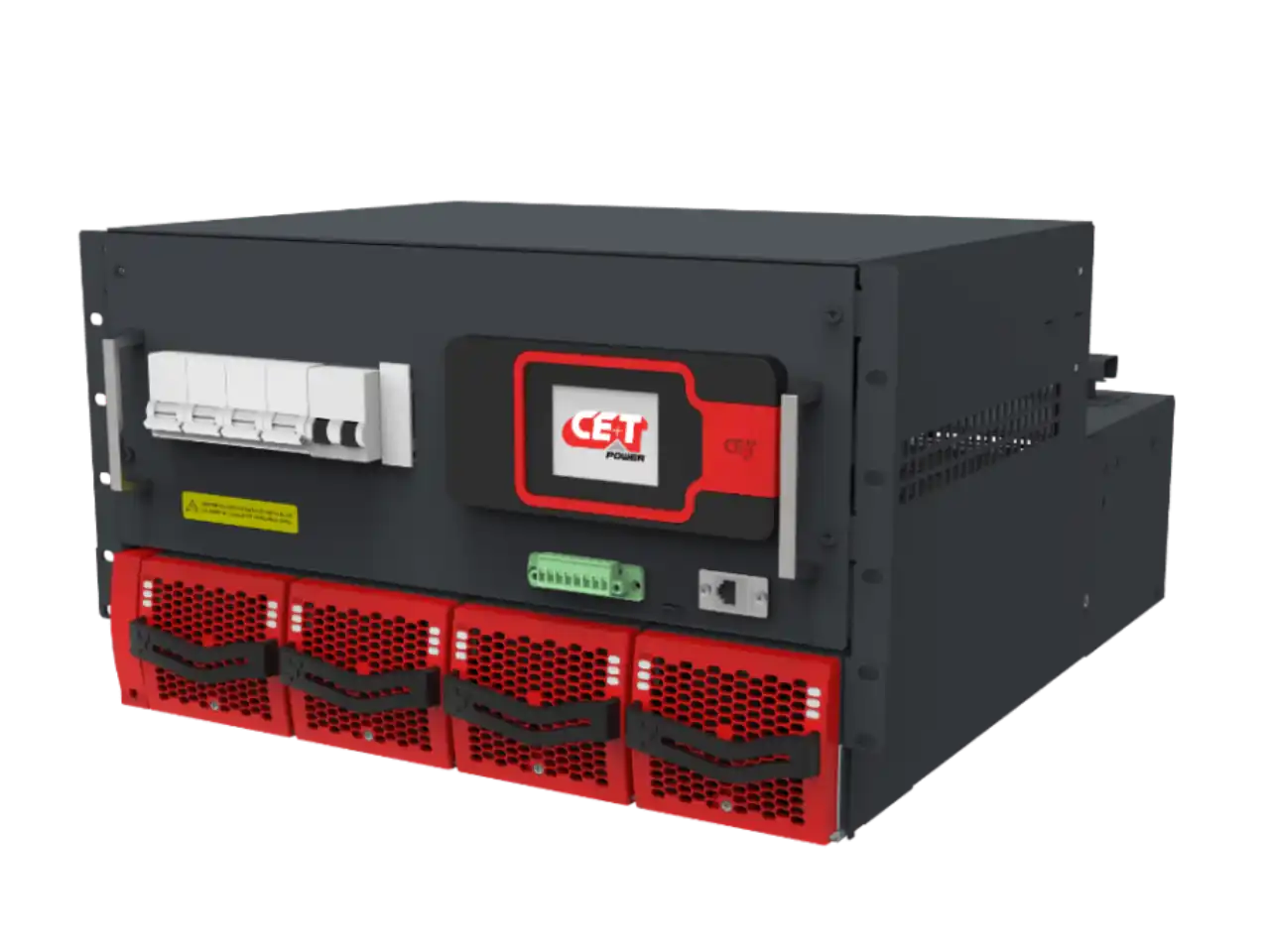
Sierra 25 – 48VDC Systems
This configuration is the industrial standard for telecom and datacom environments requiring 3 kVA / 2.7 kW of multidirectional power per module. It integrates seamlessly into existing 48VDC infrastructures while providing simultaneous 230VAC or 120VAC backup. The system facilitates dynamic power sharing, allowing the battery to secure the AC load or reinject energy into the grid during peak demands.
Each 2U building block supports modular scaling, enabling configurations up to 800 kVA to secure high-density antenna sites and edge data centers. The architecture manages internal energy buffering to ensure zero-millisecond transfers between the grid and 48VDC sources. This variant is optimized for commercial and industrial energy management, supporting peak shaving and phase balancing to reduce site operational costs.
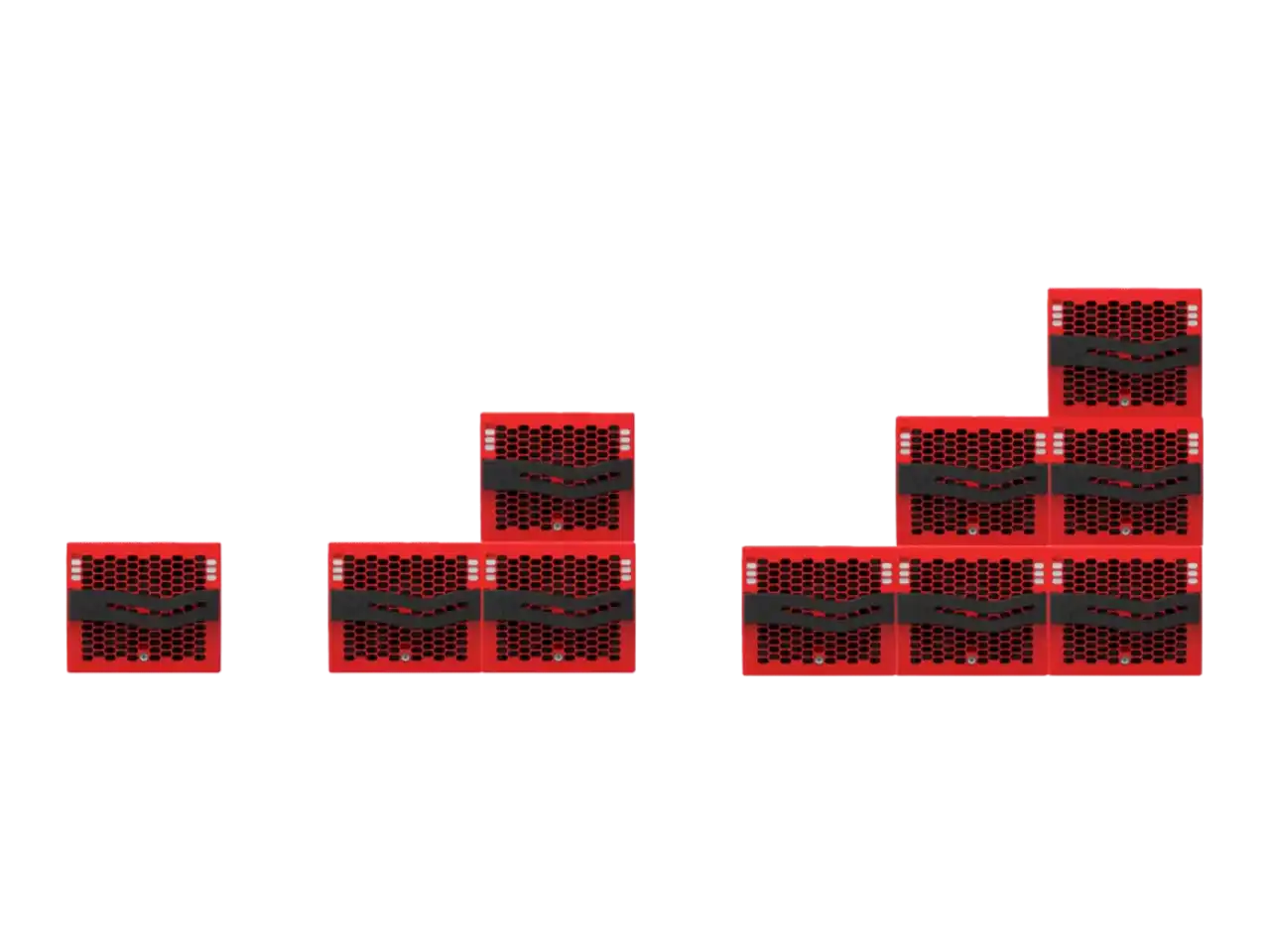
High-Voltage DC Variants (110V & 380V)
Engineered for power utilities and specialized high-voltage storage, these modules support 110VDC or 380VDC buses with 3 kVA of multidirectional capacity. This allows the Sierra 25 to secure critical industrial control systems and high-voltage DC distribution hubs within a single unified platform. The 380VDC version is specifically optimized for modern energy storage architectures and large-scale renewable integration.
These high-voltage systems maintain over 93% efficiency across all bidirectional conversion paths, significantly reducing thermal waste in utility-scale plants. By utilizing the “energy blender” logic, they can recover energy from loads and manage complex grid-interactive services like frequency response. The modular 2U design ensures easy integration into standard 19-inch racks, providing a high-density solution for evolving smart grid requirements.
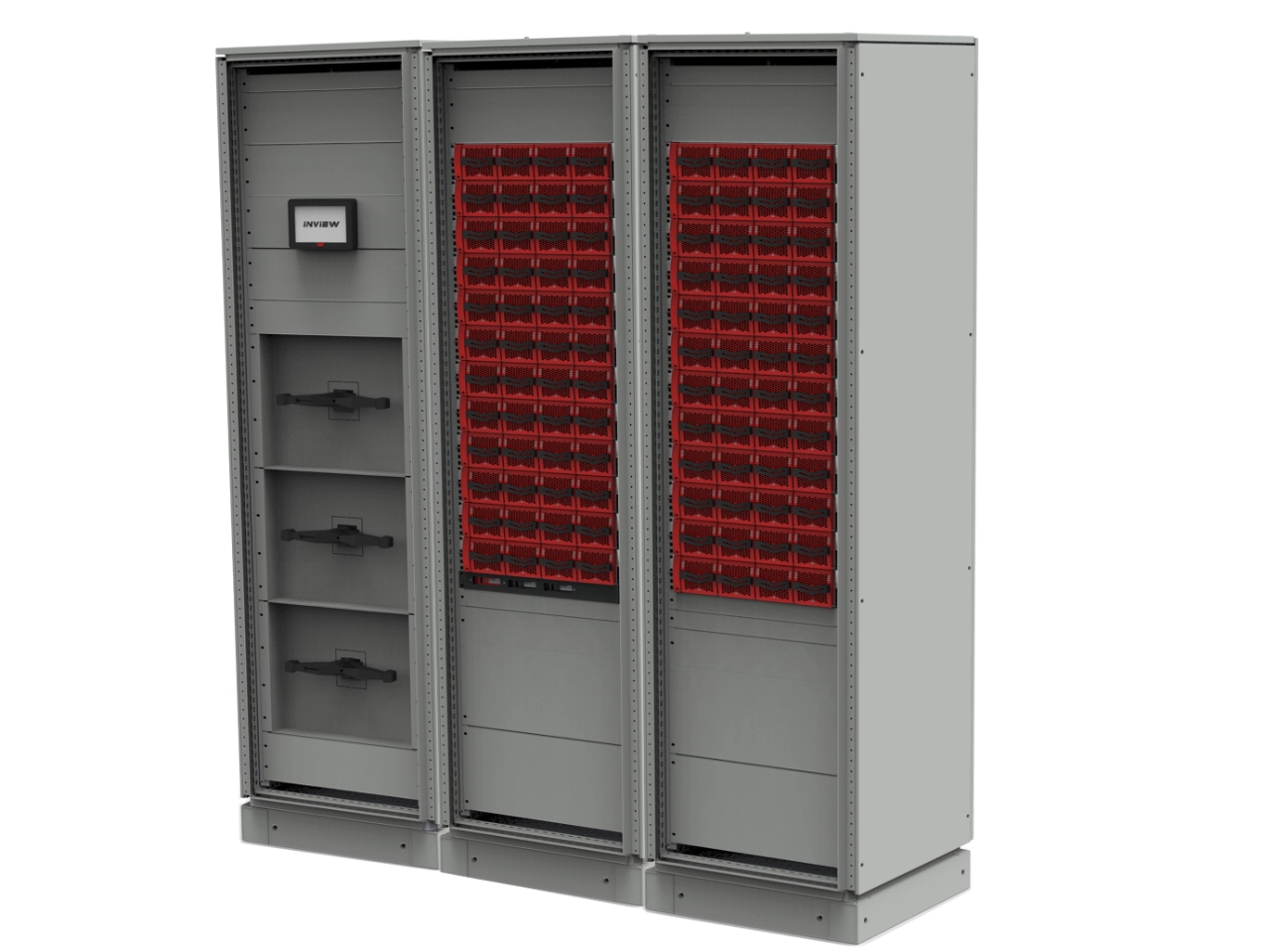
Large-Scale Modular Plants
For utility-scale resilience, Sierra 25 modules can be assembled in parallel to build high-capacity plants reaching up to 2 MW / 2.2 MVA. These plants support 3-phase architectures and are certified for grid-interactive services across Europe and Australia. The decentralized logic ensures that even at extreme power levels, the system maintains absolute continuity without a single point of failure.
These modular plants utilize the True Redundant Structure, allowing modules to operate in fallback mode if a monitoring unit fails. Managed by Inview controllers, they provide deep telemetry for commercial microgrids and grid-tied storage applications. The configuration supports autonomous energy management strategies, including local peak shaving and grid support, ensuring maximized resilience for large-scale mission-critical infrastructure.
Advanced Power Strategies with Energy Blender Technology – Sierra 25 Multidirectional Converter
The Sierra 25 functions as an intelligent energy hub, utilizing its three bidirectional ports and internal DC buffer to autonomously manage energy flow between the grid, renewables, and critical loads.
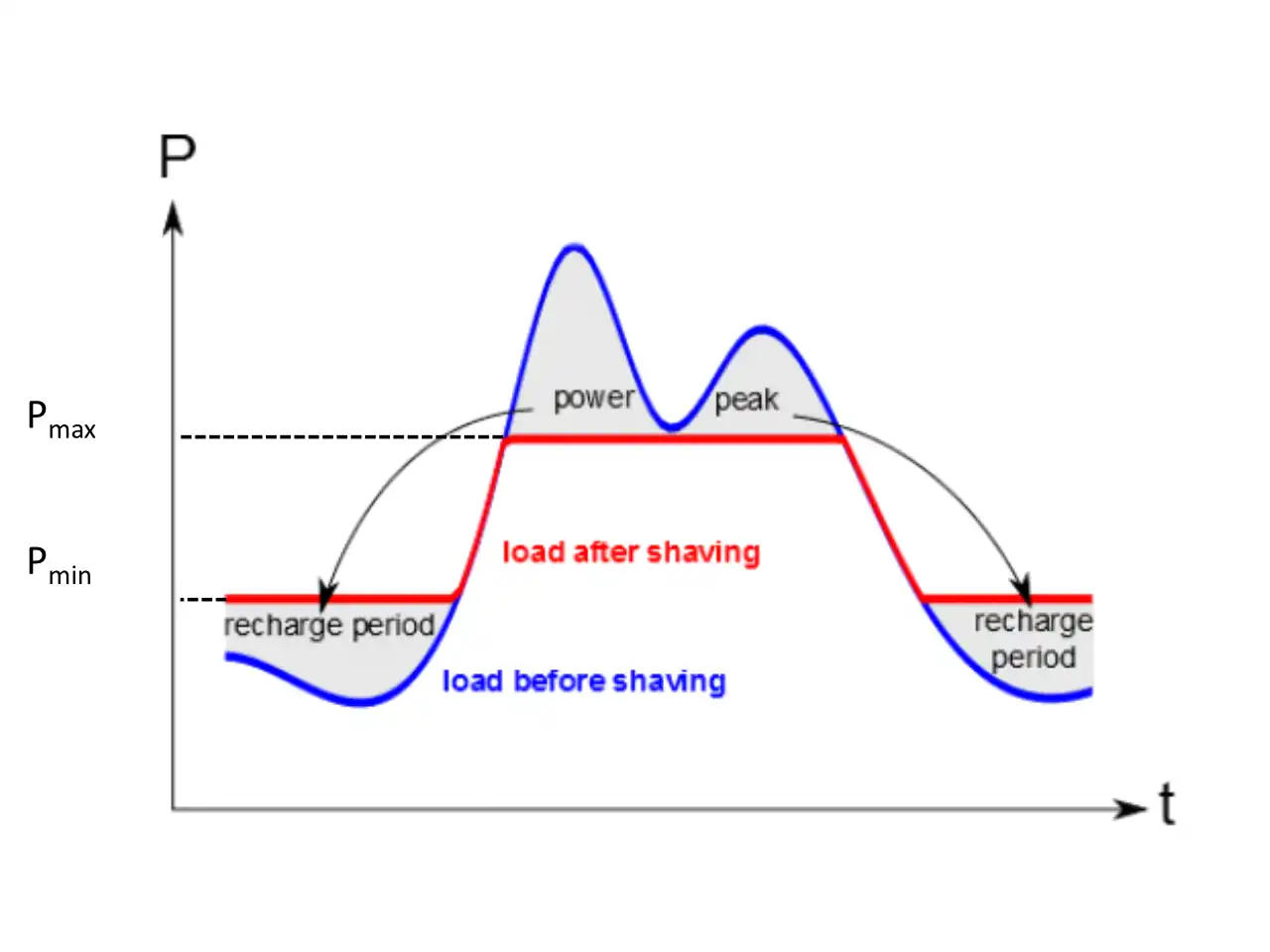
Dynamic Peak Shaving
Utilize stored battery energy to limit average power consumption from the grid during high-demand periods to avoid expensive utility surcharges. Integration with lithium battery systems significantly enhances this capacity, as their high discharge rates and superior depth-of-discharge allow for more aggressive and precise peak capping.
The Inview controller manages energy shifting to maintain power levels below a user-selectable threshold, optimizing site energy costs. This strategy is ideal for grid-connected sites facing high power peaks, providing a significant reduction in operational expenditure (OPEX) by smoothing out demand profiles through intelligent energy allocation.
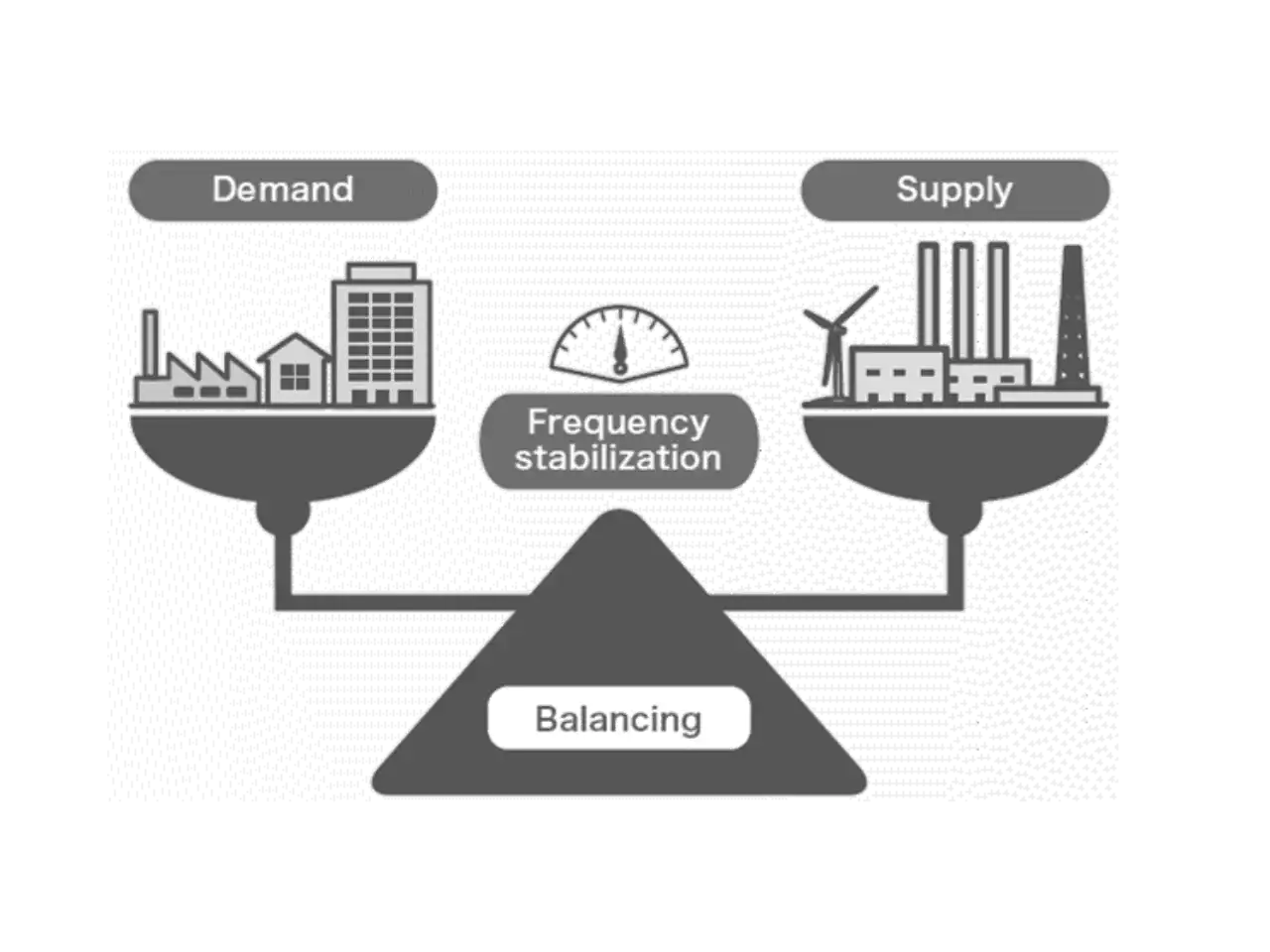
Time-of-Use Arbitrage
Optimize operational costs by charging batteries during low-tariff periods and discharging that energy when grid rates are at their highest. Utilizing lithium technology maximizes the ROI of arbitrage strategies by supporting the high cycle life required for frequent daily charge/discharge transitions without degrading capacity.
Through the Inview interface, users can configure precise schedules to benefit from tariff differences throughout the day. This reduces exposure to energy price volatility and ensures that the most expensive grid energy is replaced by local, low-cost battery reserves, significantly lowering total site electricity costs.
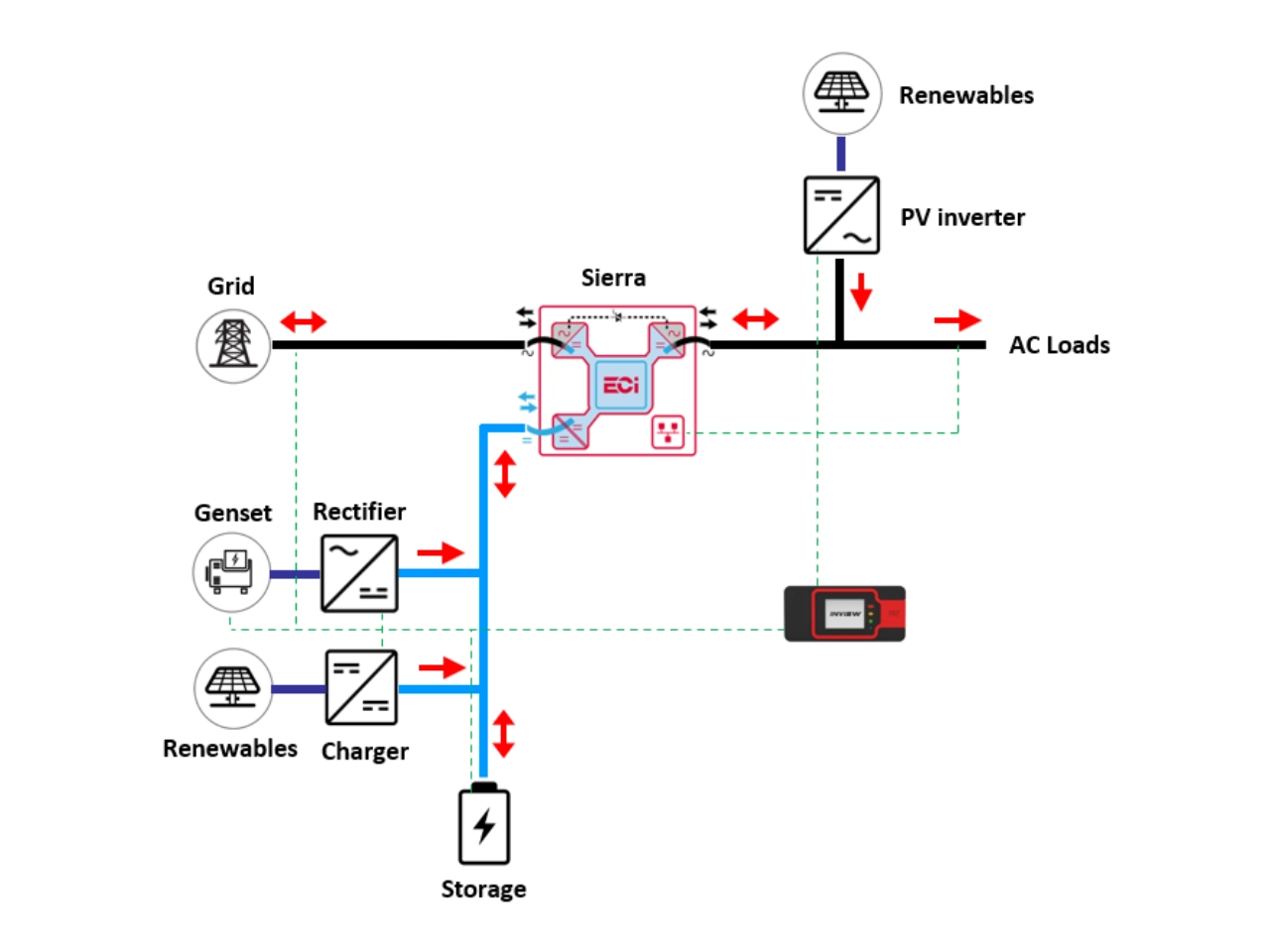
Integrated DC Coupling
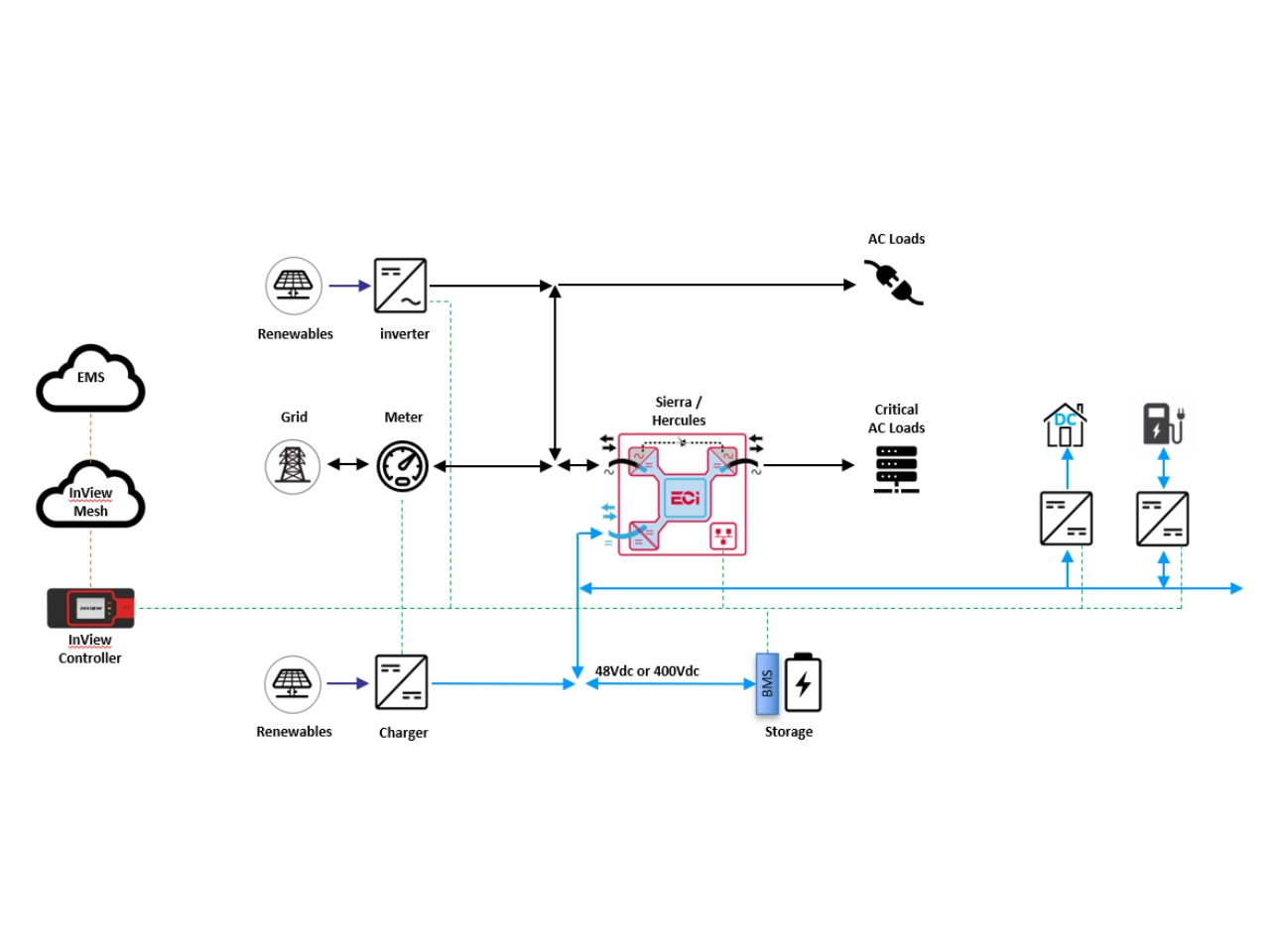
Connect renewable DC sources like solar directly to the system to maximize local production efficiency and simplify energy storage architectures. The Sierra 25 can give priority to DC sources, enabling almost self-sufficient operation while reducing the conversion stages required for battery charging.
By integrating a DC source directly into the multidirectional hub, conversion losses are minimized compared to traditional AC-coupled architectures. The system facilitates communication-based curtailment of DC sources, ensuring that energy production is always balanced with the real-time needs of the loads and battery health.
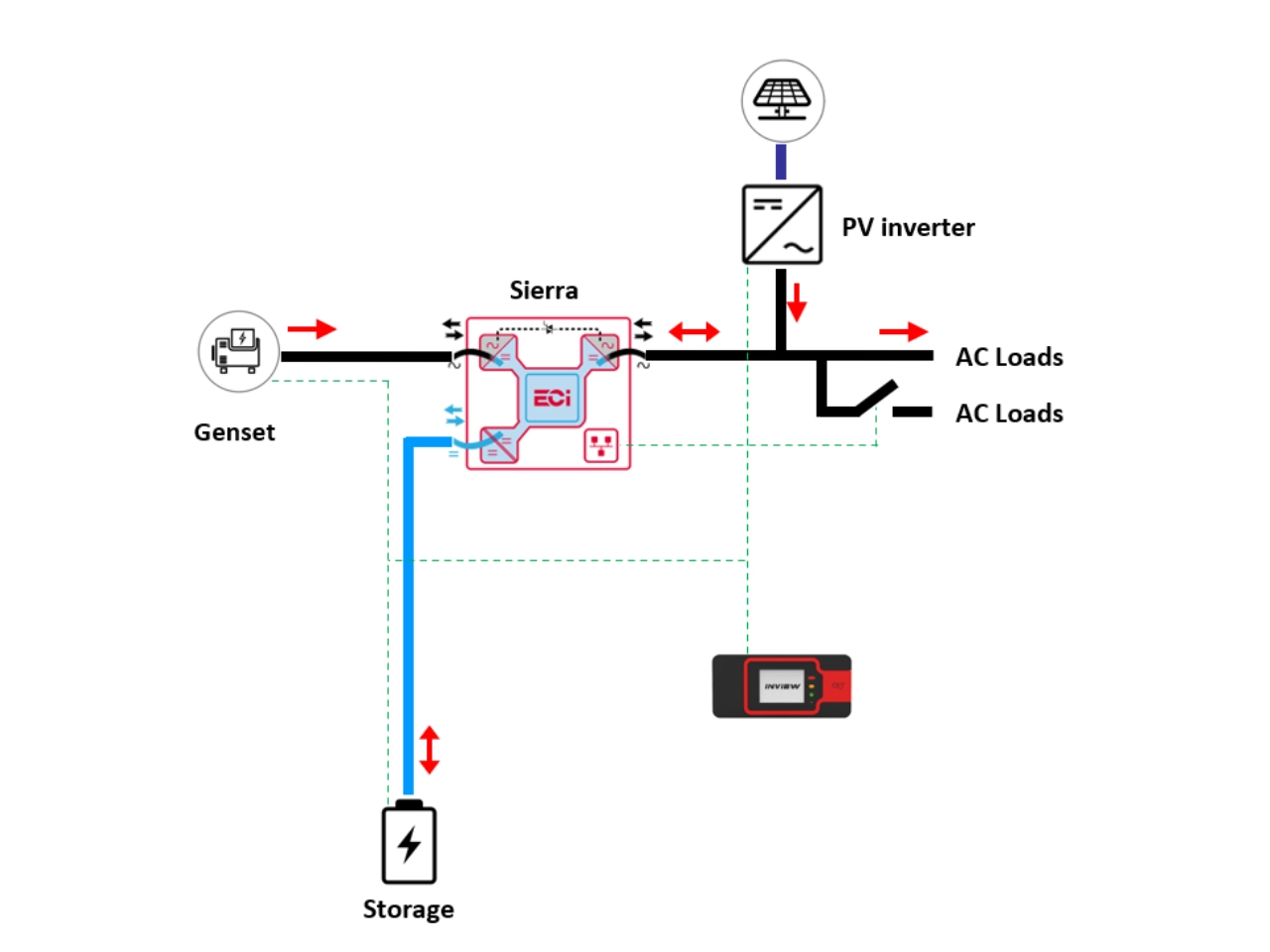
Strategic AC Coupling
Integrate standard PV inverters on the AC side to manage energy flow between local renewables, battery storage, and the grid. This setup allows for the recycling of excess AC production back into the batteries or the grid, maximizing self-consumption for high-capacity industrial sites.
In the event of an energy excess when batteries are full, the system utilizes Inview intelligence to communicate with PV inverters and curtail production. This “energy blender” approach ensures that renewable energy is fully leveraged to secure loads before any surplus is managed or reinjected into the utility network.
Smart Load Shedding
Maintain absolute continuity for critical AC and DC loads by automatically shedding non-essential equipment during periods of low energy production or grid failure. The system prioritizes essential infrastructure based on battery State of Charge (SoC) and real-time source availability.
Certified grid interactivity allows the Sierra 25 to act as more than a simple load, participating in grid support while safeguarding local site integrity. If production drops and batteries are low, the system autonomously disconnects non-critical branches to extend the backup time for the most sensitive mission-critical equipment.
Less Stranded Power
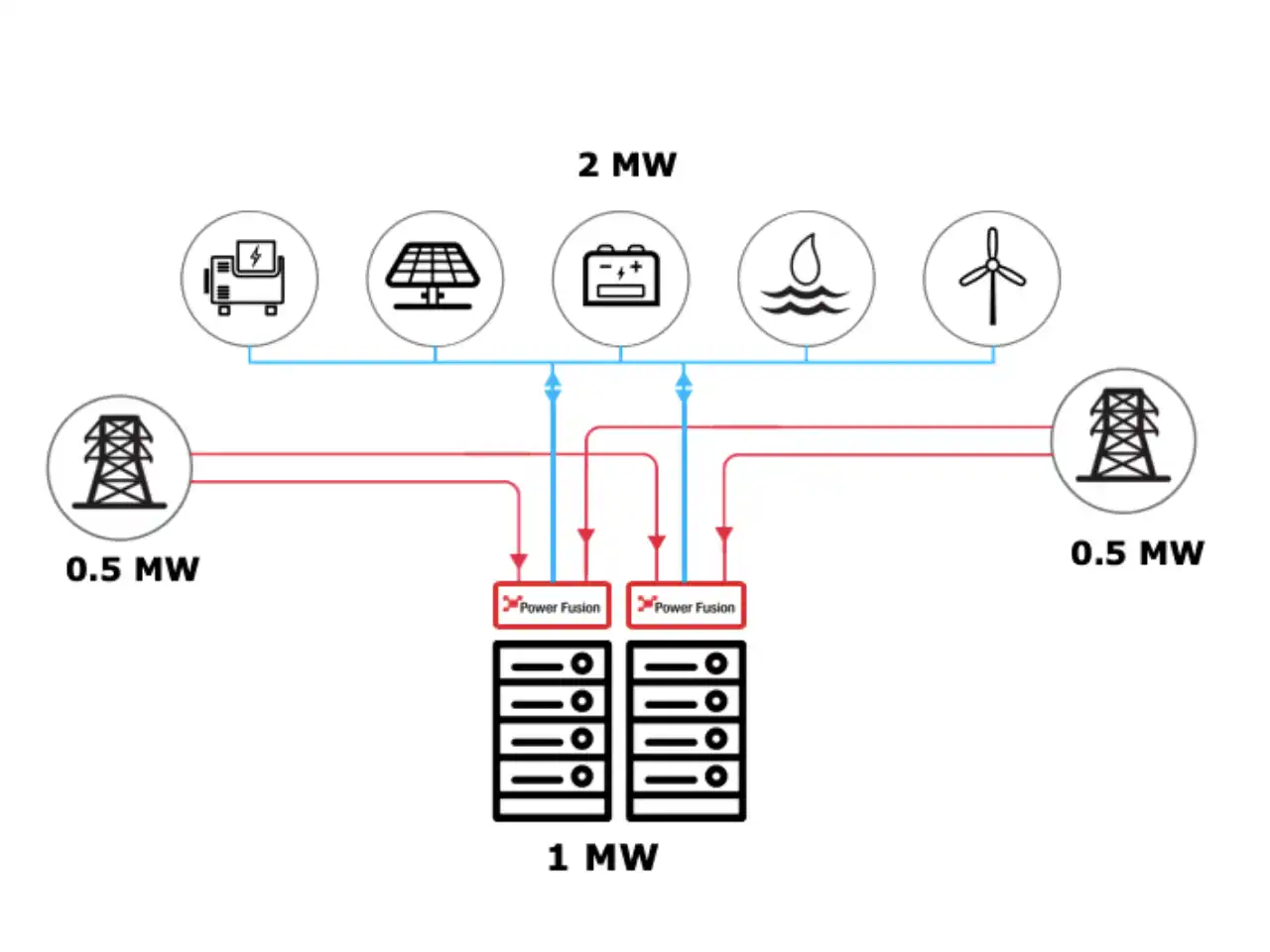
Eliminate the inefficiencies of traditional over-provisioned infrastructures by utilizing a shared DC bus to recover unused power capacity. This architecture allows for smaller grid connections and higher overall site efficiency, potentially reclaiming “stranded” energy for extra revenue.
Traditional 2N data center designs often leave massive amounts of power capacity unused and “stranded” to maintain redundancy. CE+T’s N+2 architecture utilizes the DC bus as a third source, allowing operators to divide grid connection requirements by two while maintaining 80% efficiency and full resilience.
Hardware resilience and intelligent control layers
The Sierra 25 multidirectional architecture is built on high-density 2U modules and scalable subrack platforms managed by intelligent controllers to ensure absolute power continuity through decentralized logic.
Sierra 25 Multidirectional Modules
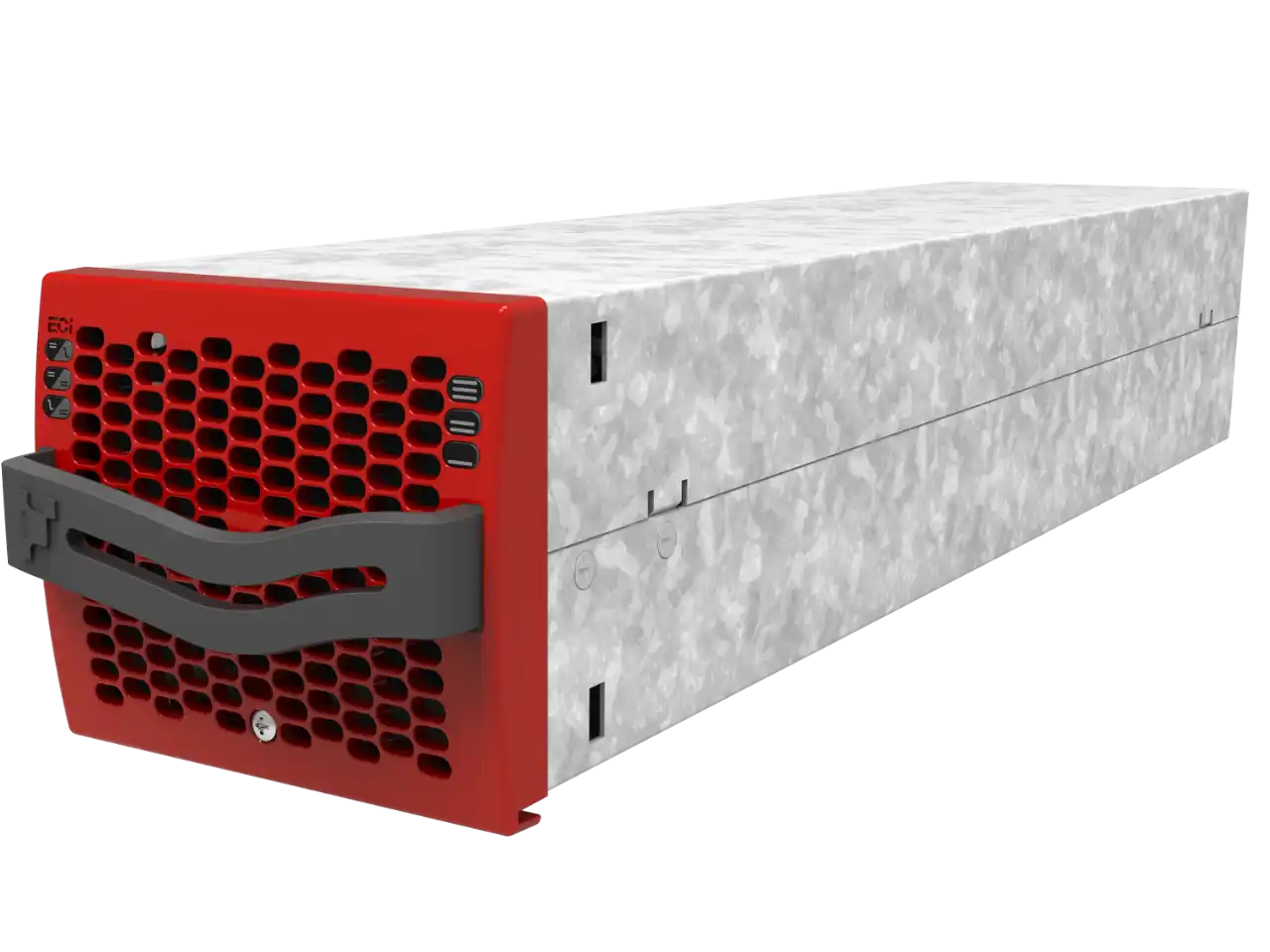
These 2U building blocks feature three bidirectional ports that function as a multidirectional energy hub, delivering up to 3 kVA / 2.7 kW. They are available for 48V, 110V, and 380VDC environments, achieving a peak efficiency of 96% in EPC mode and 93% across bidirectional conversion paths to minimize thermal waste while SECURING mixed AC and DC loads.
Every module operates with decentralized logic and is fully hot-swappable, allowing for rapid “zero-downtime” field maintenance or capacity scaling. The internal triple-port logic ensures 0ms transfer time between grid and battery sources, maintaining a pure, conditioned sine wave output even during total grid failure or during decentralized synchronization adjustments across the power plant.
High-Density Power Subracks
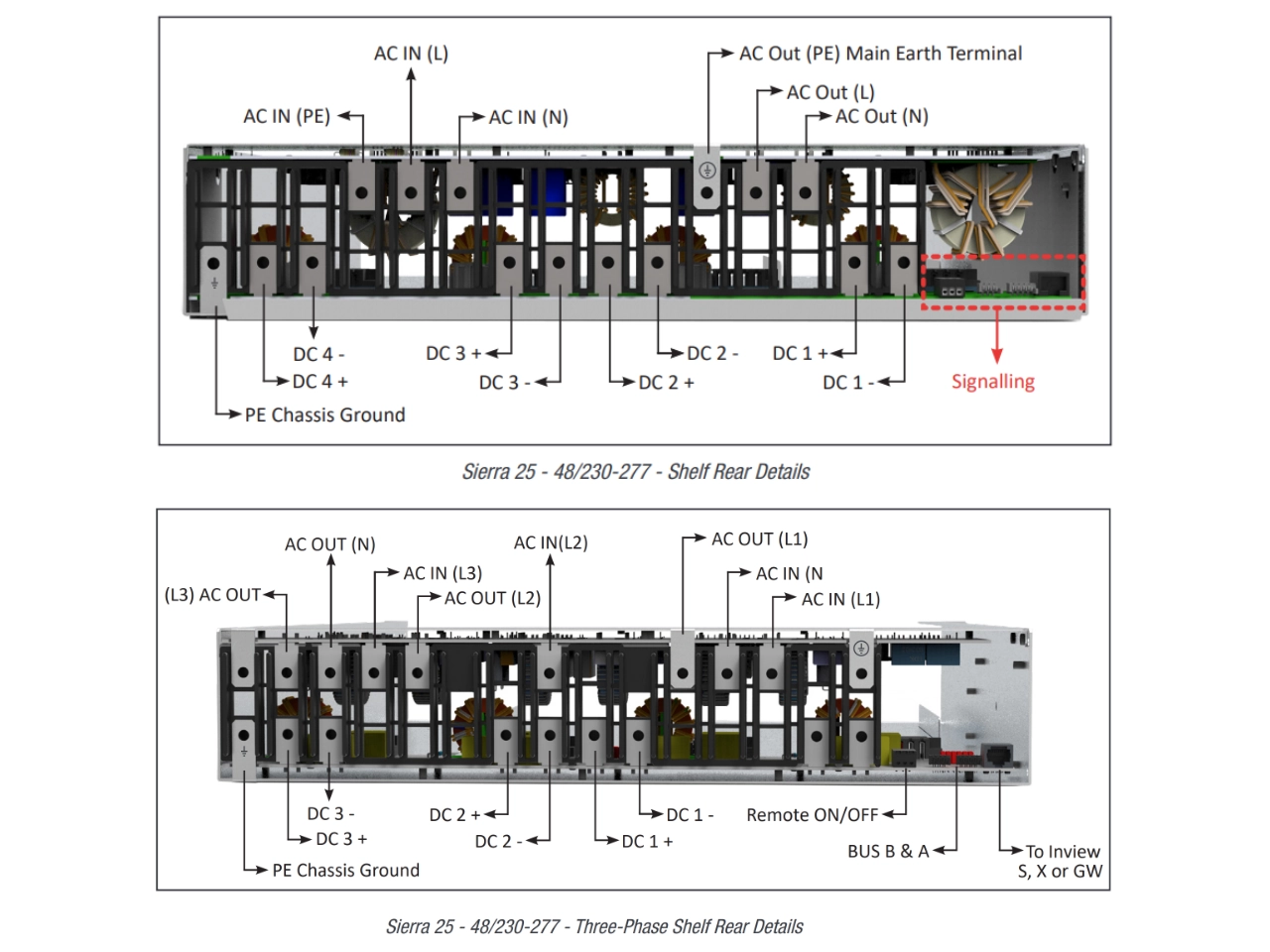
Sierra 25 Multidirectional Converter subracks are the mechanical building blocks for multidirectional plants, available in single-phase (1ph) and three-phase (3ph) configurations. A dedicated 3ph subrack houses one module per phase for a total of 9 kVA, while 1ph subracks can be stacked—one per phase—to build robust high-capacity three-phase systems.
This modularity allows for versatile scaling, such as combining two 3ph subracks for a compact 18 kVA solution or utilizing 1ph shelves providing 12 kVA per 2U to scale up to 2 MW. The architecture ensures easy access for hot-swapping modules while maintaining absolute mechanical redundancy and high-capacity AC/DC distribution within a standard 19-inch width.
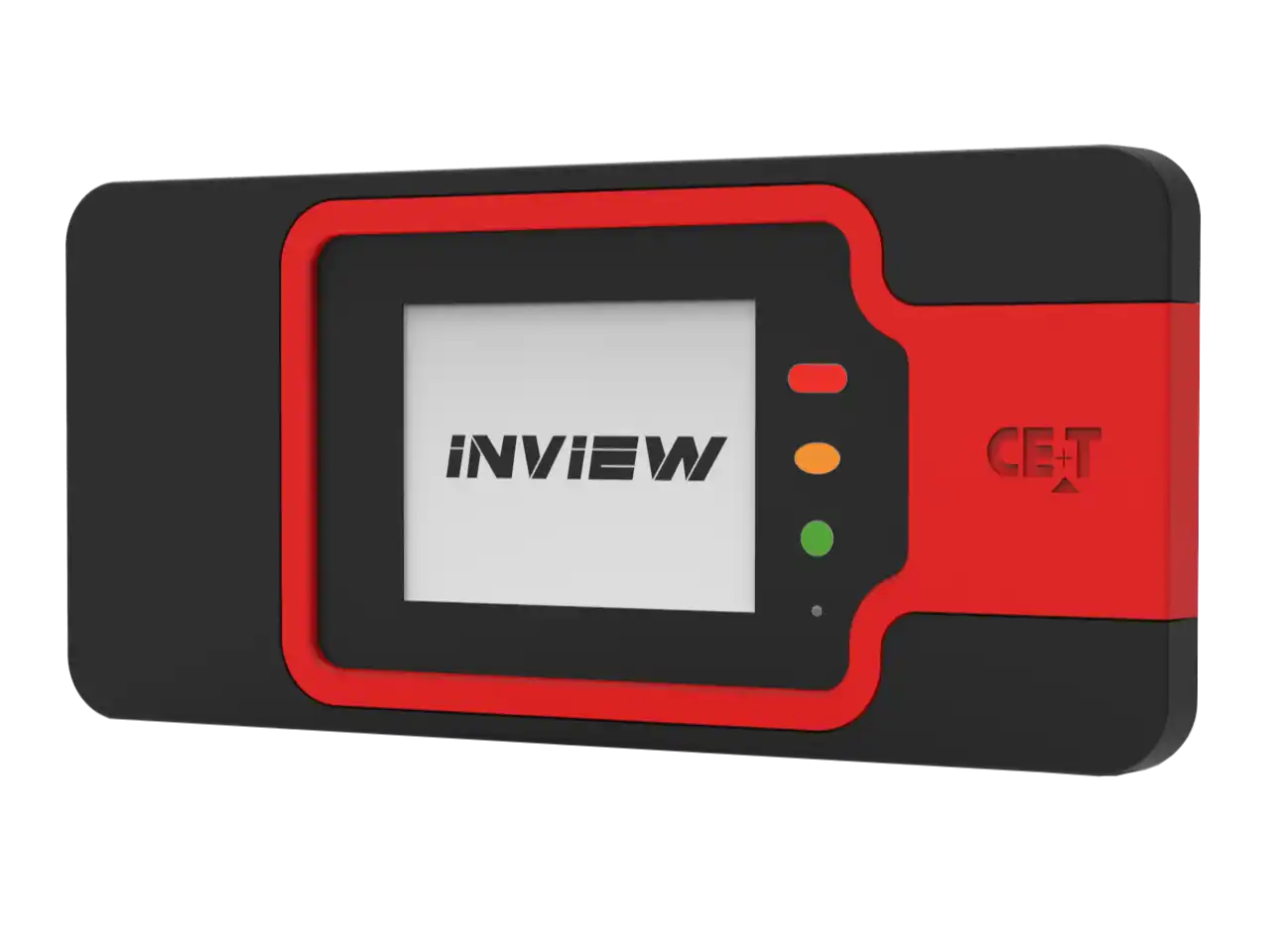
Inview Intelligent Controllers
The Inview family coordinates energy strategies and provides a user-friendly commissioning interface to define the system’s role as a DC power supply, AC UPS, or storage node. It manages grid-interactive functions like peak shaving and energy arbitrage while providing deep telemetry via web-based interfaces, SNMP, or Modbus protocols.
Engineered with a True Redundant Structure (TRS), Inview eliminates the master-slave dependency common in traditional power plants. If the monitoring unit is disconnected or fails, the modules continue to run in a pre-programmed fallback mode to maintain absolute load continuity. This decentralized intelligence ensures that the controller never represents a single point of failure.
Defining your high-capacity multidirectional power architecture?
Consult with our engineering team to design modular 3-port power systems using CE+T’s Energy Blender technology. We provide technical expertise in configuring decentralized, grid-interactive plants for 48V, 110V, or 380VDC environments, ensuring absolute load continuity across telecom, data center, and commercial microgrid infrastructures.